Quick Summary
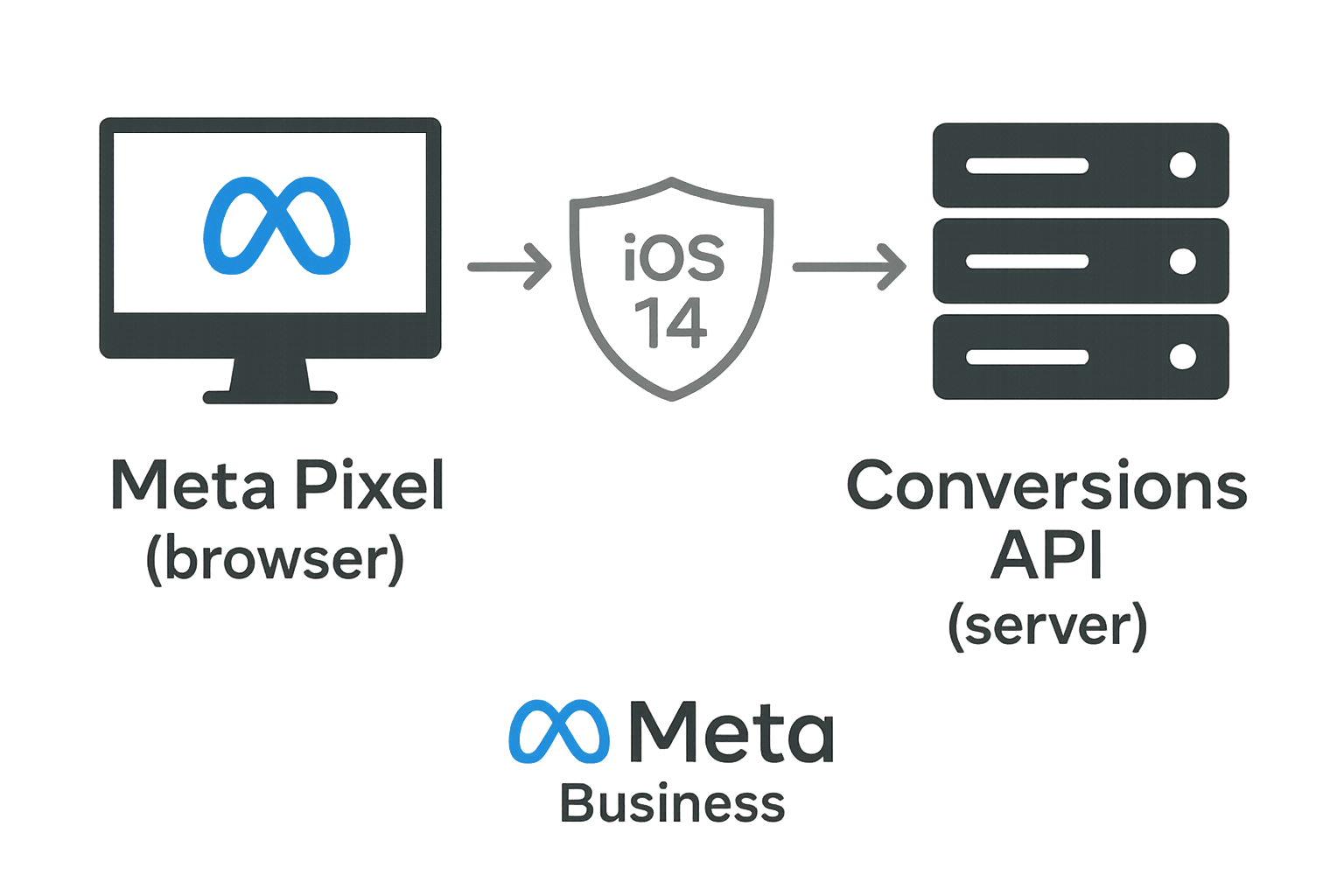
Understanding the difference between Meta Pixel and Conversions API (CAPI) is crucial for optimizing your digital marketing strategy. Meta Pixel is a browser-side JavaScript that can be blocked by iOS 14 and ad blockers, while CAPI is a server-side API that is not blocked and is more reliable. For optimal performance, both should be used in a redundant setup with event deduplication. This guide covers everything you need to know, including setup tips for Shopify, the importance of Event Match Quality, and the expected improvements in attributed conversions.
Introduction to Meta Pixel and Conversions API
In the realm of digital marketing, understanding the tools available for tracking and analytics is essential. Meta Pixel and Conversions API (CAPI) are two such tools offered by Meta (formerly Facebook) that help advertisers measure the effectiveness of their campaigns.
What is Meta Pixel?
Meta Pixel is a piece of JavaScript code that you place on your website. It collects data on user interactions, like page views and conversions, which can then be used to optimize ads, build targeted audiences, and understand user behavior. However, with the advent of iOS 14 and more sophisticated ad blockers, the Pixel's effectiveness has been challenged due to its reliance on browser-side data collection.
What is Conversions API (CAPI)?
Conversions API (CAPI) complements the Meta Pixel by allowing you to send events directly from your server to Facebook. This server-side tracking method is not affected by browser-based restrictions, making it more reliable for capturing user interactions and conversions. It provides a more accurate data stream that is less susceptible to data loss from ad blockers or privacy restrictions.
Why You Need Both Meta Pixel and Conversions API
Instead of choosing between Meta Pixel and CAPI, businesses should implement both. This dual setup ensures that data collection is robust and reliable, as it compensates for the limitations of each method.
Benefits of a Redundant Setup
- Increased Data Accuracy: By using both, you ensure that even if one method fails to capture data, the other can fill in the gaps.
- Improved Attribution: With both tools working in tandem, you can achieve more accurate attribution, leading to better-informed marketing decisions.
- Event Deduplication: Using an
event_id, you can deduplicate events to prevent double counting. This ensures that the same conversion is not reported twice.
Setting Up Meta Pixel and Conversions API on Shopify
Shopify users can benefit significantly from setting up both Meta Pixel and CAPI. Here's a step-by-step guide:
- Install Meta Pixel: Navigate to your Shopify admin, go to "Online Store" > "Preferences," and paste your Pixel ID in the appropriate field.
- Configure Conversions API: Use Shopify's native CAPI integration or a third-party app to set up server-side tracking. Ensure you connect your Shopify store to the Facebook Events Manager.
- Enable Event Deduplication: Make sure to configure your CAPI to use the same
event_idas Meta Pixel to prevent duplicate events.
For a more comprehensive setup, consider using our Meta Conversions API setup service.
Understanding Event Match Quality
Event Match Quality (EMQ) is a metric provided by Meta that indicates how well your events match Facebook user profiles. A higher EMQ score means your data is more likely to be correctly attributed to the right users, thus improving ad targeting and reporting accuracy.
Improving Event Match Quality
- Ensure Data Completeness: Provide as much user data as possible, like email addresses or phone numbers, to improve matching.
- Use Both Pixel and CAPI: This increases the chances of capturing all relevant data points.
Expected Improvement in Attributed Conversions
By effectively utilizing both Meta Pixel and CAPI, businesses can expect a notable improvement in their conversion tracking. This dual approach ensures data reliability and completeness, leading to more accurate attribution models and enhanced campaign performance.
FAQs
1. What is the main difference between Meta Pixel and Conversions API?
The main difference is the method of data collection. Meta Pixel is browser-based and can be blocked by privacy measures, while Conversions API is server-side and unaffected by such restrictions.
2. Can I use only the Conversions API and ignore the Meta Pixel?
While CAPI can work independently, using both Meta Pixel and CAPI is recommended for a more robust data collection strategy, ensuring redundancy and accuracy.
3. How does event deduplication work?
Event deduplication works by using an event_id to identify and reconcile duplicate events sent by both the Pixel and CAPI, preventing double counting in analytics.
4. What are the benefits of using a redundant setup?
A redundant setup increases data accuracy, improves attribution, and ensures continuity in data collection even if one method is blocked or fails.
5. How can I improve my Event Match Quality score?
Improve your Event Match Quality score by providing complete user data, ensuring consistent data capture across both Meta Pixel and CAPI, and regularly reviewing your setup for any data discrepancies.
Conclusion
Incorporating both Meta Pixel and Conversions API into your digital marketing strategy is essential for achieving precise and reliable data analytics. By leveraging both tools, you ensure comprehensive data capture, improved ad targeting, and better conversion tracking. For expert assistance in setting up these tools, consider reaching out to Adslytics. Our range of services, including Google Tag Manager setup and Server-Side Tracking, can help you optimize your analytics strategy. Contact Adslytics today to get started.
Need expert tracking setup?
Our Google Tag Manager experts have delivered 500+ tracking setups with a 98% success rate.
Get a Free Consultation →