GTM Data Layer Implementation Service | Adslytics | Adslytics


GTM Data Layer Implementation

GTM Data Layer Implementation

A properly structured Data Layer is the foundation of accurate, scalable tracking. We design and implement a custom dataLayer that pushes the right event data, product details, and user attributes to GTM, enabling any tag or platform to consume it reliabl
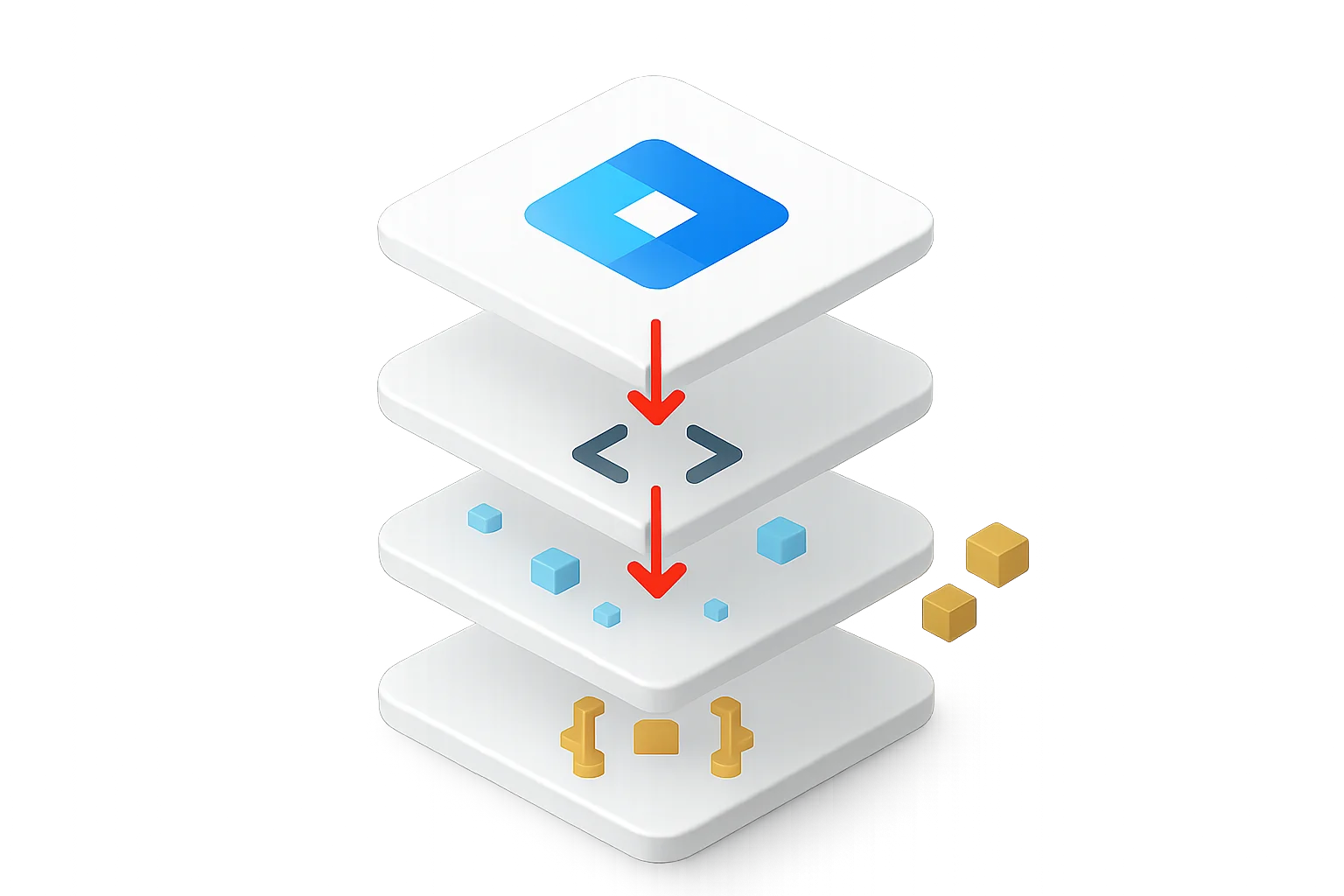
Custom data layer architecture design Ecommerce data layer implementation Lead generation data layer setup Dynamic variable configuration Single-page app (SPA) data layer Event-driven data push setup GA4 & Google Ads data mapping Meta & TikTok event parameter setup Data layer audit & validation Developer documentation & specs
Top Rated Plus Agency 98% Job Success 232+ Projects $100K+ Earned

GTM Data Layer Implementation

Build a structured, reliable data layer that powers all your tracking tags and is the backbone of scalable analytics.

Ecommerce Data Layer
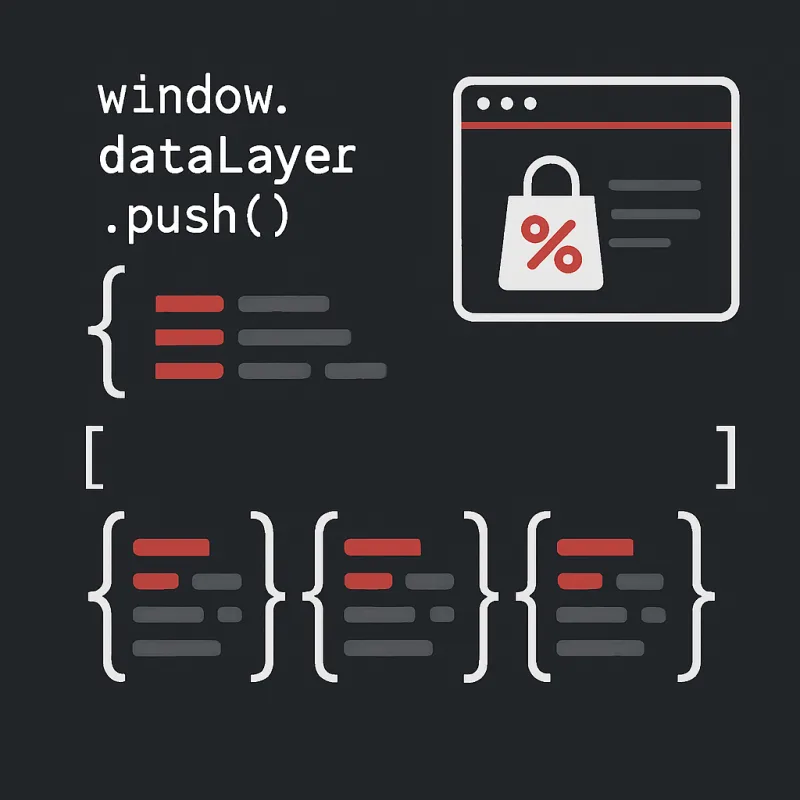
An Ecommerce Data Layer is a structured JavaScript data architecture that pushes accurate, consistently formatted product and transaction data to Google Tag Manager at each step of the shopping journey — enabling GA4 Enhanced Ecommerce, Google Ads dynamic remarketing, Meta Dynamic Product Ads, and any other platform to consume your ecommerce data reliably. We design and implement a complete ecommerce data layer that pushes correctly structured dataLayer events at every touchpoint: view_item_list (product listing pages with impression data), view_item (product detail pages with full product attributes), add_to_cart and remove_from_cart, view_cart, begin_checkout, add_shipping_info, add_payment_info, and purchase (with complete order data including transaction ID, revenue, tax, shipping, coupon, and full items array). Every data layer push includes a complete items array with product name, item_id (matching your ad platform catalogues), item_brand, item_category, item_variant, price, quantity, and any custom dimensions needed for your reporting. The implementation is tested across all key pages and scenarios — including configurable products, bundle products, coupon applications, and multiple payment methods — ensuring complete and accurate data for every transaction.
Ecommerce Data Layer

Lead Generation Data Layer

A Lead Generation Data Layer is a structured GTM data architecture designed specifically for service businesses, SaaS platforms, and B2B companies where the primary conversion actions are form submissions, quote requests, appointment bookings, free trial sign-ups, and phone call initiations rather than ecommerce transactions. We design and implement a data layer that pushes structured events for every lead generation touchpoint on your website, capturing the form name, form ID, page path, lead type, and any available lead qualification data (service interest, budget range, location, company size) that helps you segment and value leads in your analytics reporting and advertising platforms. The lead generation data layer enables GA4 to track your complete funnel from traffic source through landing page engagement to form interaction and submission, Google Ads to attribute leads to the correct campaign and keyword, and Meta to build lookalike audiences from your highest-quality lead converters. We implement it in a way that works with all form types — native HTML forms, JavaScript form builders (Gravity Forms, WPForms, HubSpot Forms), multi-step forms, and custom AJAX forms.
Lead Generation Data Layer

Custom JavaScript Data Layer
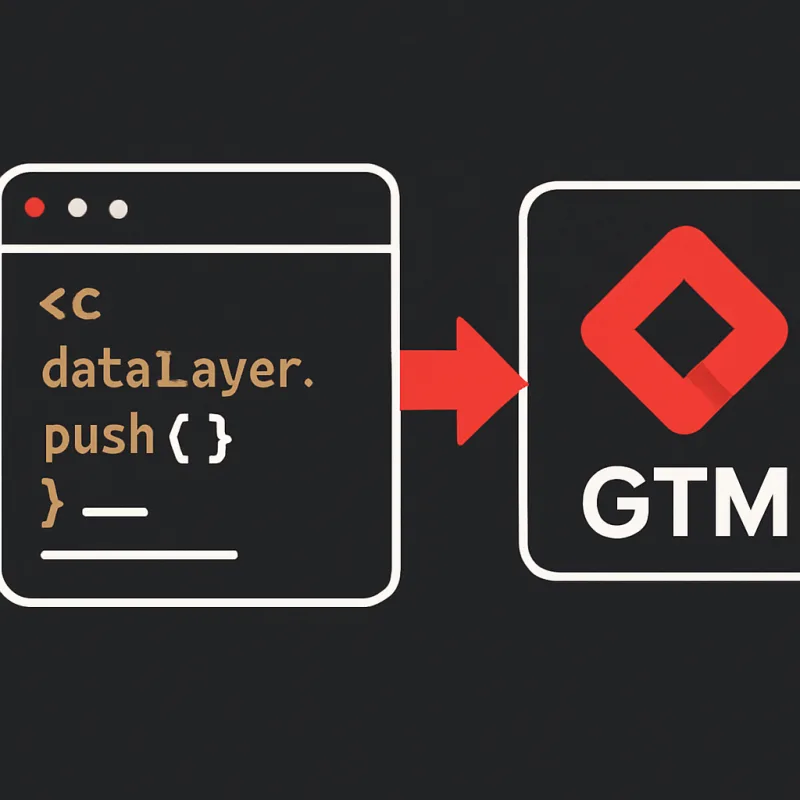
A Custom JavaScript Data Layer is built for websites and web applications with complex, non-standard user flows that cannot be tracked reliably using out-of-the-box GTM triggers or standard data layer templates — including single-page applications, React and Vue.js frontends, custom checkout flows, web apps with dynamic content loading, and portals with authenticated user sessions. We engineer a bespoke data layer implementation that works within your specific JavaScript framework and application architecture, pushing tracking events at the correct points in your application lifecycle — accounting for virtual page views in SPAs, component mount/unmount events in React, state changes in Vue.js, and any other framework-specific timing challenges that cause standard GTM event tracking to miss or misfire. The custom JavaScript data layer is designed for reliability, performance, and future maintainability — documented with clear specifications so your development team can extend it as your application grows. We work closely with your developers during implementation, providing detailed specs, reviewing pull requests, and conducting thorough testing across all user flows before sign-off.
Custom JavaScript Data Layer

Dynamic Data Layer Variables
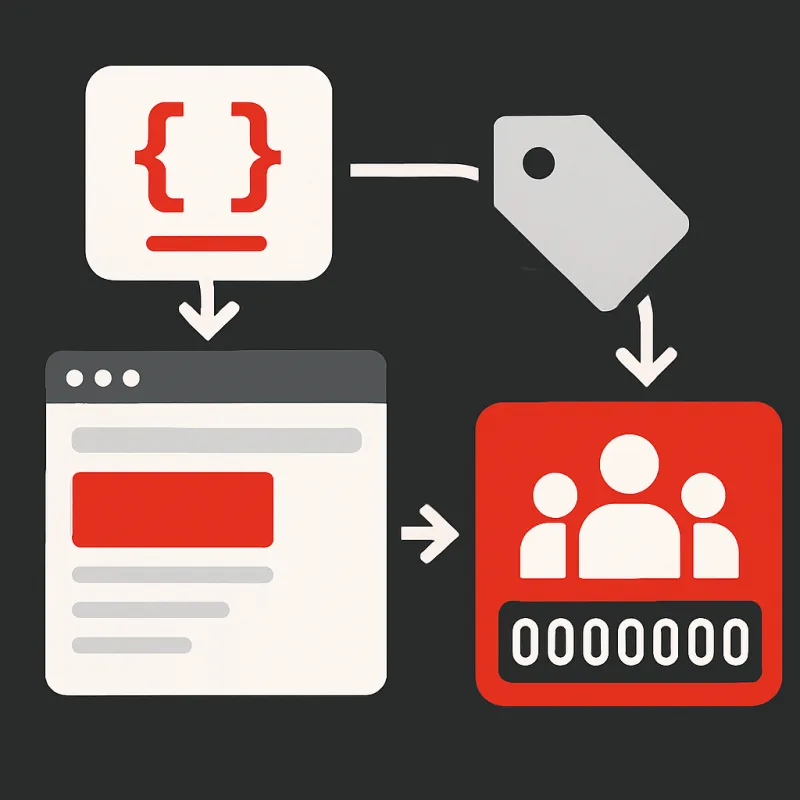
Dynamic Data Layer Variables are GTM variables that extract values pushed to the data layer by your website — product prices, user IDs, page categories, transaction values, form field contents, and any other dynamic values — and make them available to all your GTM tags, enabling rich, accurate, context-aware tracking without hard-coding values into your tags. Properly configured dynamic variables are the difference between a GTM container where every tag fires with complete, accurate data and one where tags send empty or incorrect values because the variable configuration does not correctly read from the data layer. We configure all necessary GTM data layer variables, validate that each variable reads the correct value at the correct time (accounting for data layer push timing in single-page apps), and document every variable with its purpose, source, and expected values. We also implement lookup table variables and regex table variables for data transformation — converting product category codes to readable names, mapping page types to Google Ads remarketing page type values, or formatting currency values. For complex implementations, we build custom JavaScript variables that derive values from multiple data sources, enabling tracking scenarios that are impossible with standard variable types alone.
Dynamic Data Layer Variables

Data Layer Audit & Validation

A Data Layer Audit & Validation service is a systematic review of your existing GTM data layer implementation to verify that every event pushes the correct data, every variable reads accurately, every item array is complete, and all downstream tags — GA4, Google Ads, Meta Pixel, TikTok — are receiving the values they need to function correctly. Our validation process uses GTM Preview mode, browser console inspection, manual data layer push testing, and cross-referencing with platform debug tools (GA4 DebugView, Meta Events Manager, Google Ads Tag Diagnostics) to verify every data point in your tracking implementation. We check every dataLayer.push() call against your intended specification, confirm that events fire at the correct time in the page/application lifecycle, and verify that item arrays contain all required fields with correct formatting. Common issues we identify and fix include: data layer events firing before the DOM is ready, undefined values in item arrays due to timing issues, incorrect currency formatting, product IDs that do not match your ad platform catalogue, transaction IDs that are not unique (causing deduplication failures in GA4), and checkout step events that fire multiple times due to SPA navigation. After the audit, you have complete confidence that your data layer is the reliable foundation your tracking stack depends on.
Data Layer Audit & Validation

Data Layer for Custom Websites

A Data Layer for Custom Websites is a purpose-built GTM data layer implementation for businesses running bespoke, developer-built websites that do not use a standard CMS or ecommerce platform — giving them the same tracking capabilities available to Shopify and WooCommerce stores but engineered specifically for their unique architecture. Custom websites present unique tracking challenges: there is no standard plugin to install, the checkout flow may be built in-house, the frontend framework may be React, Angular, or Vue.js, and there may be complex user authentication, dynamic content loading, or API-driven product data that needs to be captured and passed to the data layer at the right time. We work directly with your development team to design a complete data layer specification — every event, every property, every timing requirement — and either implement it ourselves or provide detailed technical specifications that your developers can implement with confidence. We then configure GTM to read from the data layer and forward data to all your tracking destinations, test thoroughly in staging and production environments, and document everything so the implementation can be maintained and extended as your website evolves.
Data Layer for Custom Websites

Worried About Your Budget?

STOP RIGHT NOW!

Take a look at our pricing and packages that will fit your needs and budget.

Data Layer Starter

Basic data layer for standard ecommerce sites

$299

$149 /One Time
  • Data Layer Architecture Design
  • Ecommerce Events Implementation
  • User Property Variables
  • Developer Integration Guide
  • Basic QA & Testing
  • Setup Documentation
Get Started

Data Layer Professional

Complete data layer with custom events and CRM data

$699

$299 /One Time
  • Custom Data Layer Schema
  • Full Ecommerce Events
  • User Lifecycle Events
  • CRM Data Integration
  • Form & Interaction Events
  • Data Layer Debugger Setup
  • GTM Variable Configuration
  • Priority Support
Get Started

Data Layer Enterprise

Enterprise data layer with SPA and native app support

$999

$499 /One Time
  • SPA/React/Vue Framework Support
  • Native App Data Layer
  • Custom Event Taxonomy
  • Multi-Team Governance Setup
  • Data Layer Documentation
  • QA Automation Scripts
  • Training Sessions
  • Dedicated Data Engineer
Contact Us
The GTM data layer is the invisible infrastructure that makes accurate, scalable digital marketing tracking possible. It is a structured JavaScript array that acts as the communication bridge between your website and every analytics and advertising tool you use. When your website pushes the right data into the data layer at the right moments — product information as a user browses your catalogue, cart contents as they add items, transaction details as they complete a purchase, form values as they submit an enquiry — GTM can read that data and pass it to every platform that needs it: GA4, Google Ads, Meta Pixel, TikTok, LinkedIn, and more. Without a properly structured data layer, tracking is fragile and unreliable. Tags try to scrape values from page elements that change with every website update. Variable configurations break when CSS classes are renamed. Ecommerce product data is incomplete because prices and SKUs are not available to GTM without being explicitly pushed to the data layer. Every website redesign breaks multiple tracking implementations that were never properly architected in the first place. With a properly structured data layer, tracking is stable, accurate, and completely independent of your website\'s visual design. The data layer provides a clean API between your website and your tracking infrastructure. Designers can restyle pages, developers can refactor components, and engineering teams can release new features without breaking the tracking — because the data layer contract between the website and GTM remains consistent. At Adslytics, we design data layer implementations with the discipline of software architecture. We document every event specification — which events fire on which user actions, what data is included in each event, what the expected values look like, and what the downstream tags will do with each value. We work with your development team to implement the data layer pushes in the correct positions in your application\'s lifecycle, handle the specific challenges of your technology stack (React, Vue.js, Angular, or server-rendered), and validate every event in both staging and production environments. A well-engineered data layer is an asset that serves your business for years. It is worth getting right.

Got Questions?

Frequently Asked Questions

The GTM data layer is a JavaScript array (window.dataLayer) that your website uses to communicate structured data to Google Tag Manager. Your website "pushes" objects into this array — containing event names, product information, user attributes, and other relevant data — and GTM reads these values through "data layer variables" to make them available to your tags and triggers. It creates a clean separation between your website's code and your tracking infrastructure.
GTM can read some values directly from the page using auto-event variables, CSS selectors, and JavaScript variables. However, page-scraping approaches are fragile — they break whenever your design or HTML structure changes. Critical data like product prices, transaction IDs, and user attributes is often not present in the page HTML at all. A data layer provides reliable, structured access to all the data your tracking needs, independent of page design.
A client-side data layer is a JavaScript array in the browser that GTM reads to access event data. It is the standard approach for most tracking implementations. For sensitive data or for server-side tracking implementations, you may also need to pass data from your server to your server-side GTM container — either by forwarding client-side events or by triggering server-side events directly from your application backend.
For ecommerce, your website pushes structured data layer events at each shopping journey touchpoint. For example, when a user views a product page, your website pushes a view_item event with an items array containing product name, ID, price, brand, and category. GTM reads this data via data layer variables and passes it to your GA4 ecommerce tag and Google Ads dynamic remarketing tag. Without this push, GA4 has no way to know which product the user viewed.
Yes. React and Next.js sites have specific implementation considerations — particularly around the component lifecycle, virtual page view events for client-side navigation, and the timing of data layer pushes relative to component rendering. We specialise in data layer implementations on modern JavaScript frameworks and handle all framework-specific challenges in our implementation.
A complete purchase event data layer push should include: event name (purchase), transaction_id (unique order ID), value (order total), currency, shipping, tax, coupon, and an items array with one object per product containing item_id, item_name, item_brand, item_category, item_variant, price, and quantity. Incomplete item arrays — missing price or item_id — are the most common cause of broken ecommerce tracking.
A data layer implementation timeline depends on your website's complexity and your development team's capacity. The specification and design phase (our work) typically takes 3–7 days. Development implementation of the data layer pushes into your website typically takes 1–3 sprints depending on the number of events and your team's other priorities. We provide detailed specifications to minimise development time and QA cycles.
A data layer audit reviews your existing data layer implementation to verify that every event pushes the correct data at the correct time, all variable values are accurate and consistently formatted, and no events are missing, duplicated, or firing out of sequence. We use GTM Preview mode and browser console inspection to validate every data layer push against your intended specification.
A data layer specification document lists every event name, the conditions under which it fires, every property in the event object with its data type and expected values, and example payloads. We produce this specification as part of our data layer design service, providing your development team with everything they need to implement correctly without guesswork.
With a properly designed data layer, a website redesign should not break tracking — as long as the data layer events remain in place. The data layer is independent of your visual design. However, a redesign typically involves new pages, new user flows, and potentially a new tech stack — all of which may require data layer updates. We offer redesign readiness reviews to identify which data layer pushes need updating before launch.

Trusted by Businesses Worldwide

What Our Clients Say

Real results from businesses who trust Adslytics with their analytics.

"Adslytics did a great job with our GA4 analysis and report. They were able to put complex analytics data into a very understandable document for our client. Highly recommend!"

Eric H.

Digital Agency Owner

"The team was quick with responses, very knowledgeable about issues, and helpful throughout the process. I appreciated their work habits and would hire Adslytics again."

Nick T.

Marketing Manager

"Adslytics is a very professional agency that managed our project successfully. They delivered exactly what was promised and I will definitely hire them again in the future!"

Hady M.

E-commerce Business Owner

Unlock Accurate Tracking That Drives More Revenue

GTM Data Layer Implementation — Done Right

Stop losing money to broken tracking. Book a free consultation and we'll review your setup.

All Services

All GTM Data Layer Implementation Services

Explore our complete range of specialised sub-services. Click any to learn more.

Talk to Us. It's Free.

Get accurate conversion tracking that powers smarter ad spend and real business growth.

Talk to Us, It's Free

We are always willing to help. Let us know what you are looking for, and we will develop a unique solution for you.

Thank You!

Your message has been sent successfully. We'll get back to you soon.

Protected by reCAPTCHA — Privacy & Terms

Business Hours

Our support Hotline is available 24 Hours

Toll Free

+1 (818) 245-8385