What is a Customer Data Platform (CDP) and do I need one?
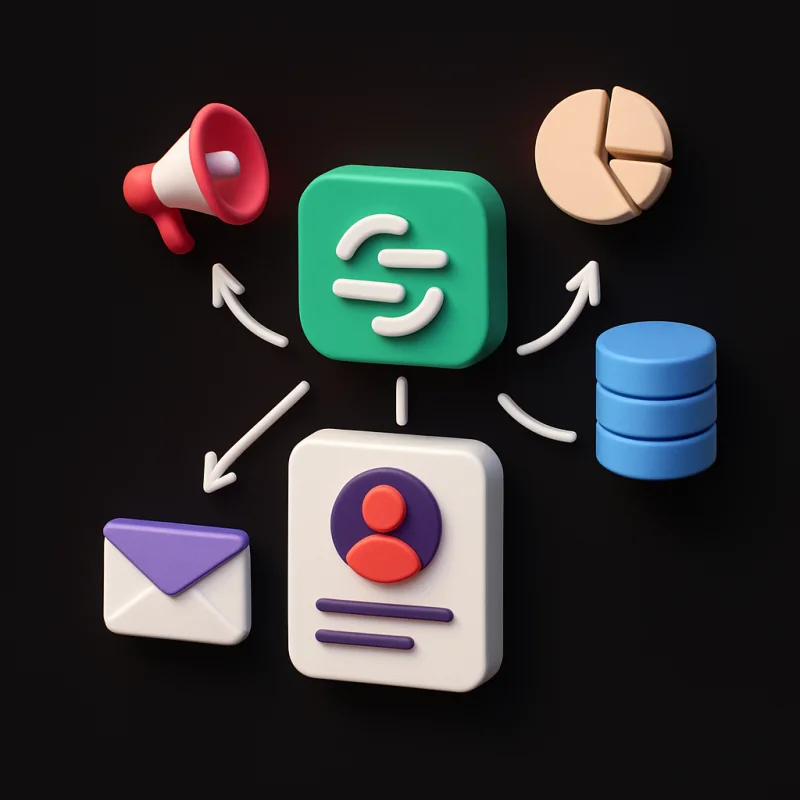
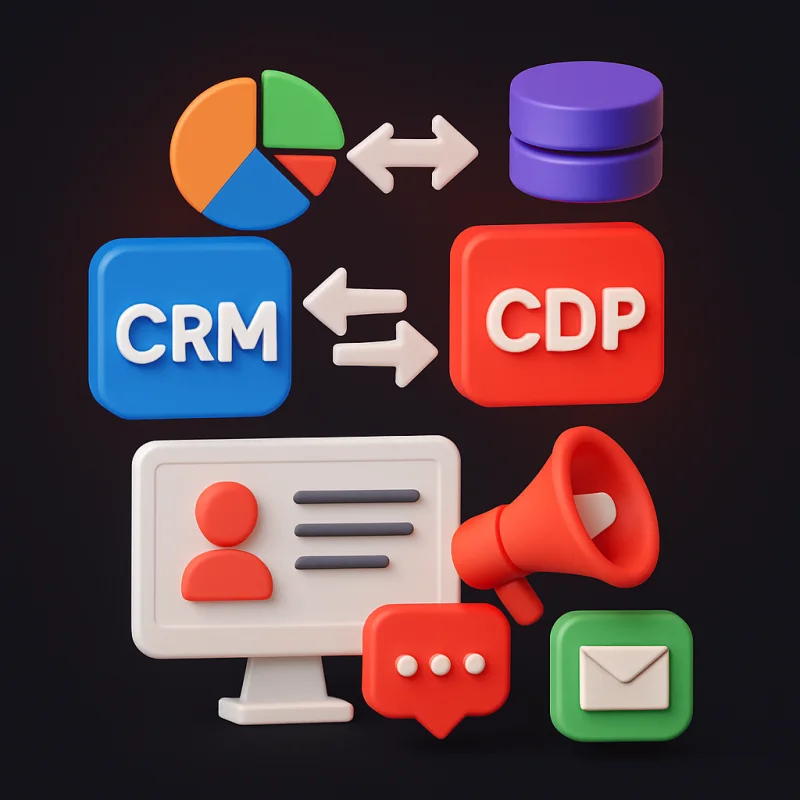
A CDP is a software platform that collects customer data from all your touchpoints (website, mobile app, server, CRM) and routes it to all your downstream tools — analytics platforms, advertising platforms, marketing automation, CRM. You need a CDP if you are managing 5+ data destinations and experiencing inconsistent data across tools, spending significant engineering time on tracking implementations, or scaling into personalisation and real-time audience activation that requires a unified customer profile.
What is the difference between Segment, RudderStack, and mParticle?
Segment is the most widely adopted CDP, with the largest destination library (450+ integrations) and the most mature product. It is ideal for most SaaS and ecommerce businesses. RudderStack is an open-source alternative that can be self-hosted for complete data control and zero per-event pricing — ideal for privacy-conscious or high-volume businesses. mParticle is an enterprise-grade CDP purpose-built for mobile-first, high-volume businesses (gaming, media, consumer apps) with advanced data planning and governance features.
What is event routing in a CDP?
Event routing is the process by which the CDP receives events from your sources and forwards them to your destinations. You configure routing rules in the CDP — specifying which events go to which destinations, what transformations should be applied (renaming properties, filtering events, adding enrichment), and what conditions must be met. For example, you might route all ecommerce events to both Amplitude and Klaviyo, but only send purchase events to Google Ads and Meta CAPI.
What is identity resolution in a CDP?
Identity resolution is the process of merging anonymous user profiles with identified user profiles into a single, unified customer record. When an anonymous website visitor completes a form submission (providing their email), the CDP merges all their previous anonymous activity with their newly identified profile. This creates a complete customer journey from first touch to conversion, enabling accurate attribution, personalised messaging based on full behavioural history, and consistent identity across all downstream tools.
Does using a CDP replace Google Tag Manager?
Not necessarily — the two serve different purposes and are often used together. A CDP handles your first-party event collection and data routing to analytics and marketing platforms. GTM handles third-party tag management (pixels, scripts) and browser-side tracking configurations. Many CDP implementations use GTM to load the CDP SDK on the website, then route CDP events to most destinations server-side, while GTM still manages some browser-side pixels (like legacy ad platform scripts) that are not available as CDP destinations.
What is a Segment Spec and why should I follow it?
Segment's Spec (or "tracking plan") is a set of standard event schemas for common business models — ecommerce (Product Viewed, Product Added, Order Completed), B2B SaaS (Account Created, Trial Started, Subscription Upgraded), mobile, and video. Following the Spec ensures your events are compatible with Segment's native destination integrations (many of which automatically map Spec events to the destination platform's format) without custom transformation code. We design your event tracking to align with the appropriate Spec from the start.
Can a CDP help with GDPR and data privacy compliance?
Yes. CDPs provide centralised data governance capabilities that are difficult to achieve with distributed tracking implementations: centralised consent signal propagation (block event routing to specific destinations based on user consent status), data deletion request handling (delete a user's profile and cascade the deletion to connected destinations), data retention controls, and PII masking before data reaches specific destinations. These capabilities make compliance easier to implement and audit than managing consent across individual tool integrations.
What is a CDP tracking plan?
A tracking plan (or data plan) is a document that defines every event your CDP collects — the event name, when it fires, all properties and their data types, which destinations receive it, and the business purpose it serves. It is the contract between your product/marketing team (who define what data they need) and your engineering team (who implement the tracking). We produce a complete tracking plan as part of every CDP implementation, and Segment and RudderStack both provide native tracking plan tooling to enforce it automatically.
How does server-side event collection work in a CDP?
Server-side event collection sends events from your application server directly to the CDP, rather than from the user's browser. This bypasses ad blockers, browser privacy restrictions, and client-side data loss. For purchase events and other sensitive business-critical data, server-side collection ensures complete, accurate data regardless of the user's browser configuration. We implement server-side sources alongside client-side sources, with correct deduplication to prevent double-counting.
What does a CDP audit involve?
A CDP audit reviews your existing Segment, RudderStack, or mParticle implementation for data quality, schema consistency, destination configuration accuracy, identity resolution correctness, and destination mapping completeness. We compare events firing in the CDP against your intended tracking plan, identify missing events, duplicate tracking, inconsistent property names, and broken destination mappings, and deliver a prioritised remediation plan. Many businesses inherit CDP implementations from previous teams with significant accumulated debt.