What Are Cookieless Pings?
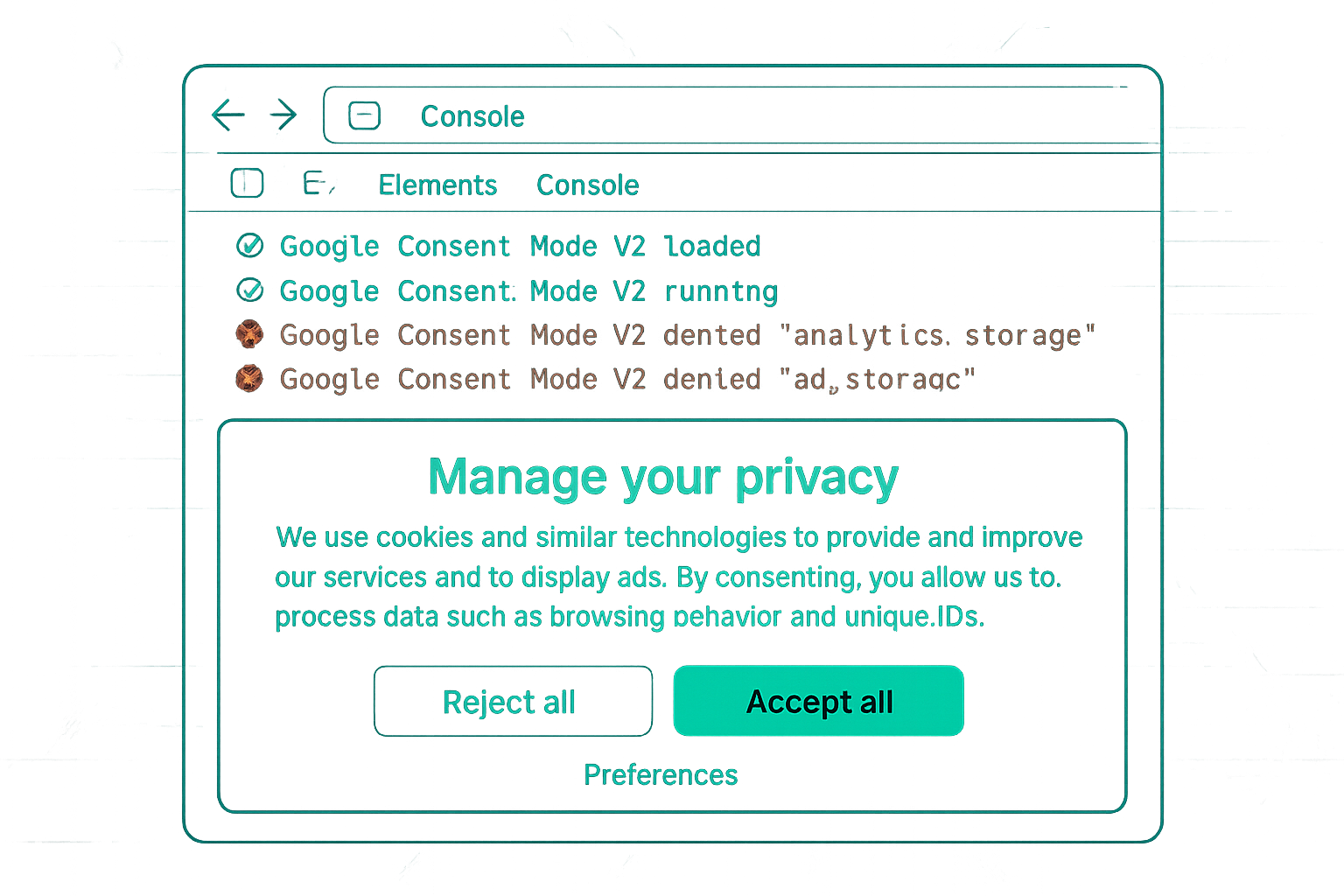
When a user has denied consent and Consent Mode v2 is implemented in advanced mode, Google tags do not set cookies — but they still fire. These fires send "cookieless pings" — minimal HTTP requests to Google's servers that contain a reduced set of data compared to a full, consented hit.
What Data Cookieless Pings Contain
A cookieless ping includes:
- Event type: whether this was a page view, conversion, or other event
- Page URL: the current page URL, without any cross-site tracking parameters
- User agent: browser and device type information
- Country: coarse location based on IP (the full IP is not stored)
- Timestamp: when the event occurred
- Consent state: indication that this was a denied-consent request
What Cookieless Pings Do NOT Contain
- Client ID or User ID (no persistent user identity)
- Google Click ID (gclid) — cannot attribute to a specific ad click
- Any cross-site identifiers
- Personal data (name, email, phone)
- Full IP address (stripped before logging)
- Session information linking multiple page views to a single user
How Cookieless Pings Enable Modelling
While a single cookieless ping cannot be attributed to a specific user or campaign, aggregated patterns across many pings provide statistical signals. Google's modelling uses the proportion of cookieless pings showing conversion-like behavior (e.g., a ping from the order confirmation page URL) to estimate the conversion rate among non-consenting users in aggregate. These aggregate patterns are safe to process under legitimate interests or soft-consent frameworks.
Network Request Verification
You can see cookieless pings in browser DevTools (Network tab, filter for "collect" or "g.co/g"). Cookieless pings have different parameters than consented hits:
- No _ga cookie parameter
- No gclid parameter
- A consent state parameter indicating denied consent
Summary
Cookieless pings are minimal, privacy-safe signals sent when Consent Mode v2 advanced mode is active and a user has denied consent. They contain only event type, page URL, coarse location, device type, and timestamp — no personal identifiers or cross-site tracking data. These pings enable Google's statistical modelling to estimate conversions from the non-consenting population, supporting Smart Bidding and analytics completeness without violating the user's consent choice.
See our Consent Mode v2 Implementation service for implementation guidance.
Need Consent Mode correctly configured? Contact Adslytics.
Need expert tracking setup?
Our Google Tag Manager experts have delivered 500+ tracking setups with a 98% success rate.
Get a Free Consultation →