What Is Reverse ETL?
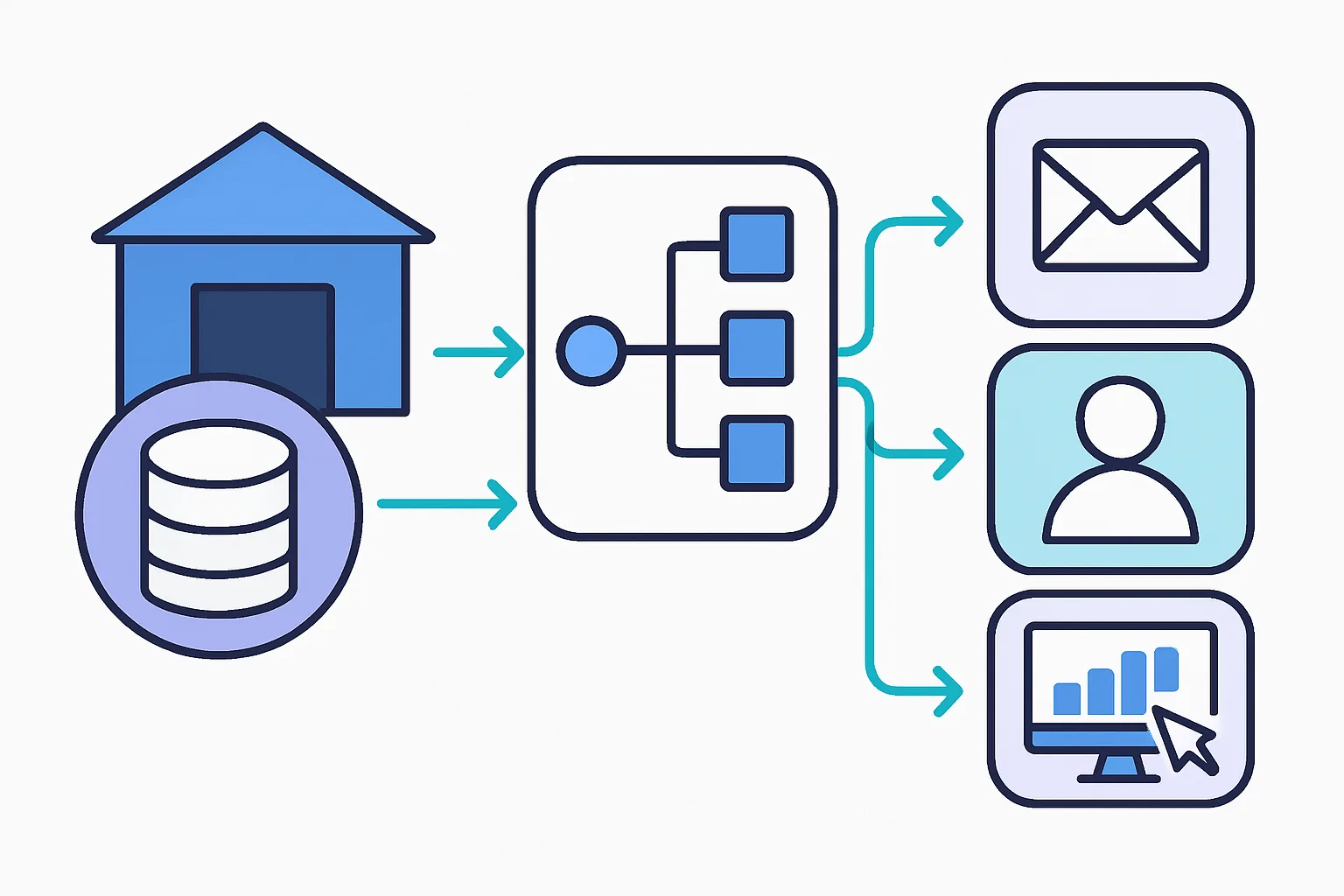
Traditional ETL (Extract, Transform, Load) moves data from operational systems into a data warehouse for analytics. Reverse ETL does the opposite: it extracts data from your warehouse and loads it into operational tools — your CRM, email platform, ad networks, and customer success tools.
The data warehouse has always been the most complete view of your customer. Reverse ETL makes that data actionable for marketing and sales teams without requiring them to write SQL or run manual exports.
This is a cornerstone of the composable CDP architecture that our data infrastructure team helps businesses build.
Why It Matters
Your data warehouse likely has the richest customer data in your organization:
- Product usage data (which features a user has activated)
- Subscription and billing history
- Support ticket history
- Purchase and return history
- Calculated metrics (LTV, engagement score, churn probability)
Without Reverse ETL, this data stays in the warehouse where only analysts can access it. Reverse ETL makes it available to:
- Email platforms for behavioral segmentation and triggers
- CRM for sales context and prioritization
- Google Ads for Customer Match audience upload
- Support tools for customer context in tickets
How Reverse ETL Works
- Connect your warehouse: Point the Reverse ETL tool at your BigQuery or Snowflake instance
- Define a model: Write a SQL query that defines the data you want to sync (e.g., SELECT email, ltv, last_purchase_date FROM customers WHERE status = 'active')
- Map to a destination: Map warehouse columns to fields in your destination tool (email → email, ltv → HubSpot custom property "LTV")
- Set a sync schedule: Hourly, daily, or triggered by warehouse data updates
- Monitor syncs: The Reverse ETL tool tracks which rows were synced, updated, or deleted
The Reverse ETL tool handles incremental syncs — it tracks which rows have changed since the last run and only syncs new or modified records, not the entire dataset every time.
Popular Reverse ETL Tools
- Census: Strong destination library, visual model builder, dbt integration
- Hightouch: Excellent audience sync features, good for ad platform activation
- Polytomic: Focuses on CRM and sales tool syncing
- Rudderstack Reverse ETL: Built-in if you're already using RudderStack as your CDP
Reverse ETL vs Traditional CDP: The Key Difference
Traditional CDPs excel at real-time event-based triggers. Reverse ETL is primarily scheduled sync-based (hourly at best in most tools).
For use cases like "send an email 1 hour after a user abandons their cart," you typically need an event-based CDP because the warehouse won't know about the abandonment until a batch sync runs.
For use cases like "sync yesterday's LTV calculations to CRM every morning" or "weekly audience upload to Google Ads from warehouse segment," Reverse ETL is perfect and more cost-effective than a full CDP.
The Combined Architecture
Many sophisticated data teams use both:
- CDP for real-time event routing: Behavioral events flow to email and ad platforms immediately
- Warehouse + Reverse ETL for enrichment: Calculated traits and complex segments flow from the warehouse to operational tools on a schedule
This gives you the best of both worlds — real-time triggers for time-sensitive use cases and warehouse-powered analytics for complex segmentation.
Our data architecture team helps you design the right combination for your use cases and budget. Contact us to evaluate whether Reverse ETL alone can meet your needs or if a full CDP is required.
Need expert tracking setup?
Our Google Tag Manager experts have delivered 500+ tracking setups with a 98% success rate.
Get a Free Consultation →