Why Migrate to Server-Side
Browser-side marketing pixels have three fundamental limitations: ad blockers block them (10-40% of users), browser privacy changes restrict their cookie lifetime, and they fire after the page loads (introducing timing risks). Server-side tracking addresses all three: server requests are not blocked by browser ad blockers, are not subject to browser cookie restrictions, and fire from your backend independent of browser conditions.
Which Pixels to Migrate First
Prioritise server-side migration based on value and ad blocker impact:
- Meta Purchase events via CAPI: highest priority — Meta's browser pixel has significant ad blocker loss, iOS 14+ privacy restrictions, and CAPI provides the most measurable uplift
- Google Ads conversions: Enhanced Conversions (the server-side equivalent for Google) improves match rate for consenting users
- TikTok Events API: if TikTok is a significant channel
Note: for GA4, the primary benefit of sGTM is data quality (first-party cookies, no ad blocker loss) rather than direct revenue impact.
The Migration Architecture
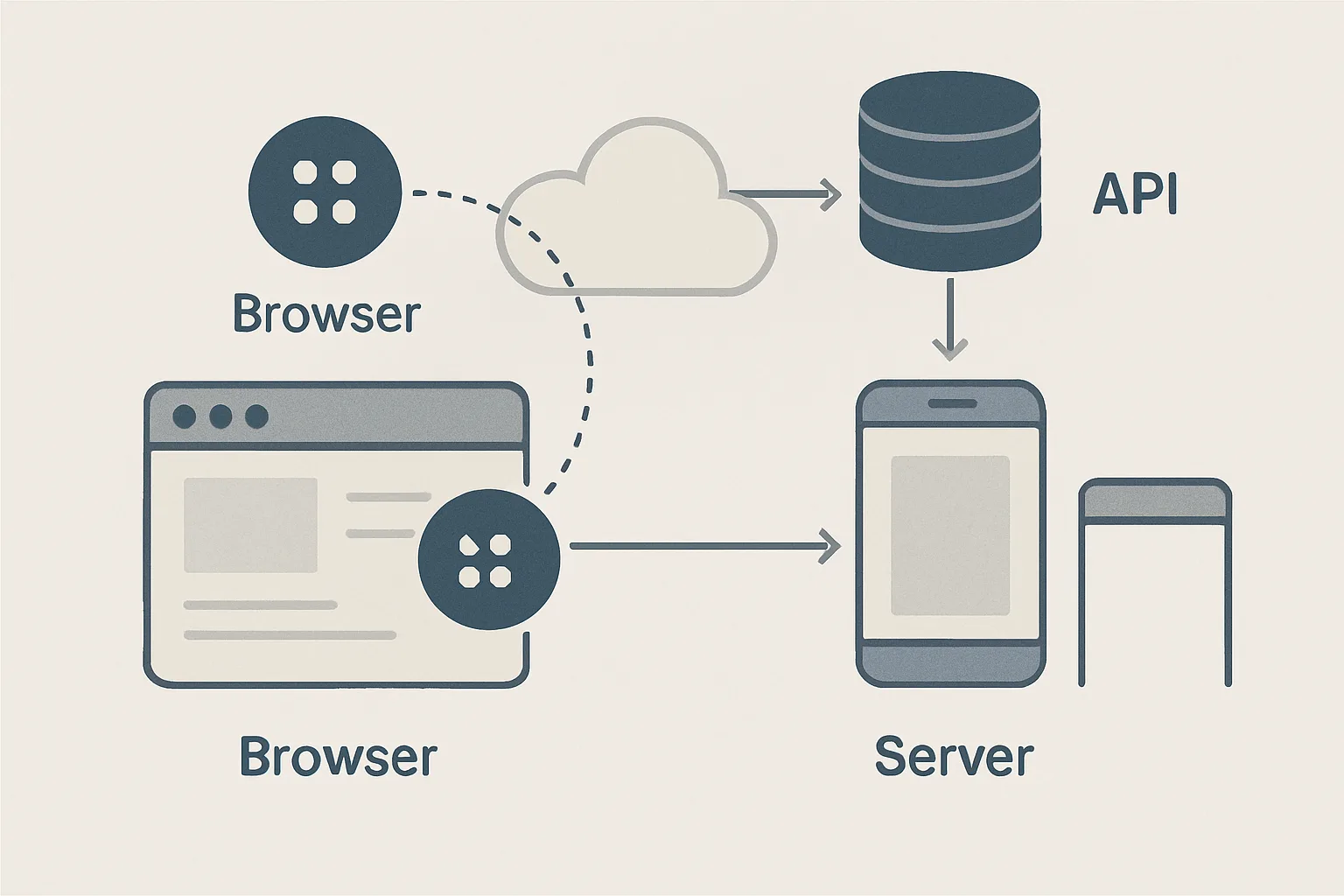
A server-side migration maintains the browser pixel alongside the server-side API, not instead of it (initially). The browser pixel continues providing data for users without ad blockers and for platforms where server-side is not yet implemented. The server-side API adds coverage for the ad-blocked population. Deduplication prevents double-counting.
This parallel approach (browser + server) is the standard production architecture, not a transitional state — most businesses run both indefinitely.
Implementation via sGTM
Server-side GTM (sGTM) is the management layer for server-side pixels, mirroring how client-side GTM manages browser pixels:
- Deploy sGTM container on your own domain (e.g. https://track.yourdomain.com) using Google Cloud Run, Stape.io, or similar
- Configure client-side GA4 tag to send events to sGTM instead of directly to Google
- sGTM receives GA4 events and forwards them to GA4, Google Ads, Meta CAPI, TikTok Events API
Each platform that sGTM forwards to requires platform-specific server tags (available in the sGTM tag template gallery).
Measuring Migration Impact
After implementing CAPI alongside the browser pixel, measure uplift in Meta Events Manager:
- Compare total Purchase events before and after CAPI implementation
- Event Match Quality (EMQ) score should improve
- Compare GA4 purchase count to Meta purchase count — the gap should narrow
Summary
Server-side pixel migration priority: Meta CAPI for purchase events first (highest uplift), then Google Ads Enhanced Conversions, then TikTok Events API. The architecture is parallel (browser + server with deduplication), not replacement. sGTM provides the server-side management layer equivalent to client-side GTM. Measure impact by comparing total conversion counts before and after, and by checking platform-specific EMQ scores.
See our Marketing Pixel Setup service for server-side migration planning.
Need pixels migrated to server-side? Contact Adslytics.
Need expert tracking setup?
Our Google Tag Manager experts have delivered 500+ tracking setups with a 98% success rate.
Get a Free Consultation →