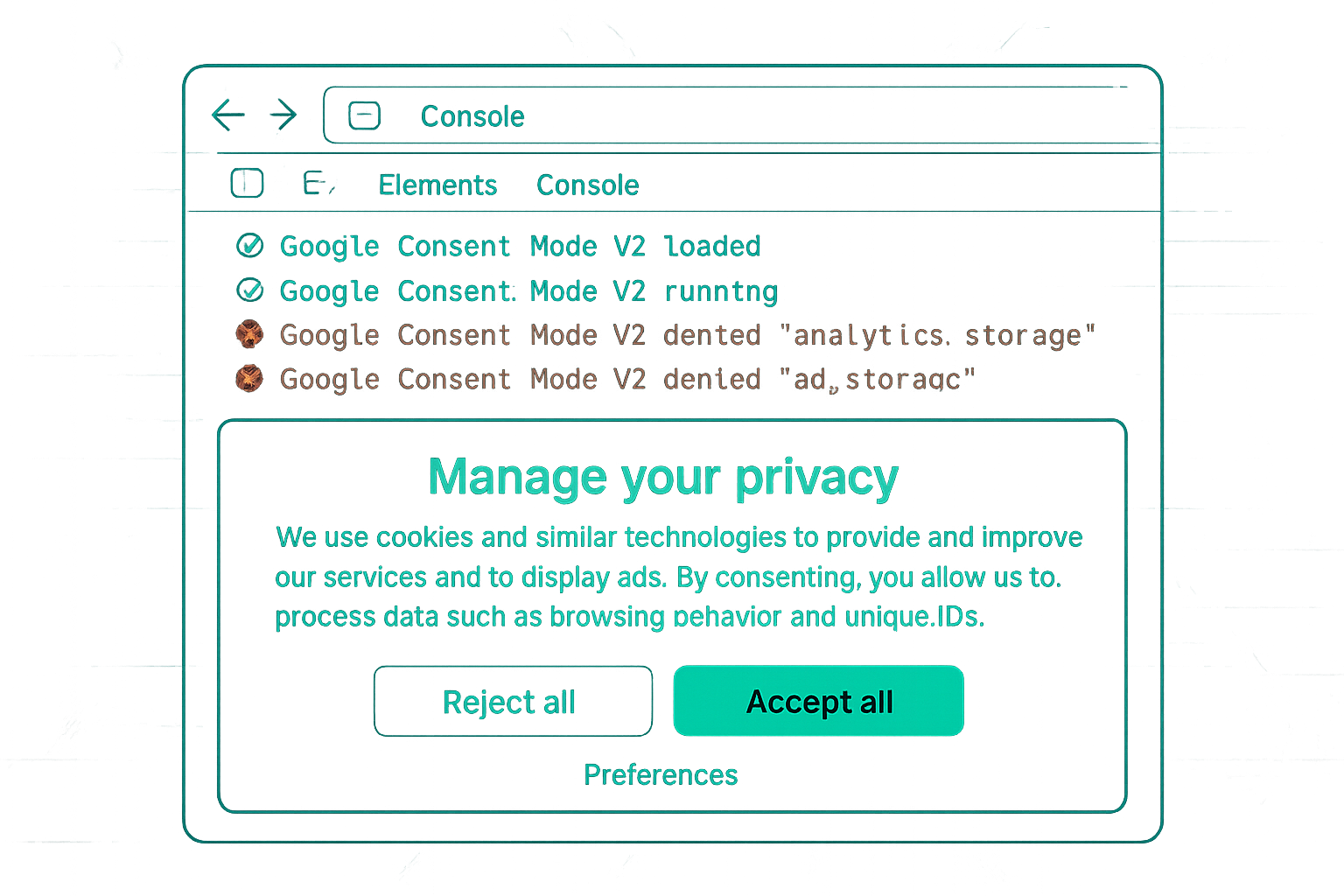
The European Commission's Digital Omnibus proposal, published in November 2025, includes changes to how cookie consent works. Marketers have read the headlines as "the end of cookie banners". The text and the commentary since then say something more limited.
This article summarizes what has been proposed, what remains unsettled, and what to do now. It is a summary for marketing and analytics teams and not legal advice. Check your approach with a privacy lawyer.
Where things stand
The Digital Omnibus is a proposal. Lawmakers are still negotiating it, and the text can change. Until a final version is adopted and takes effect, your current GDPR and ePrivacy obligations remain the baseline. We found no confirmed adoption date.
What the proposal says about cookies
As reported by law firms and consent platforms, the proposal includes these ideas:
- Consent stays the general rule for advertising, profiling, cross-site tracking and third-party analytics.
- A conditional exemption for certain first-party analytics and audience measurement that is aggregated. One source notes that the wording seems to exclude tools that operate across multiple services, clients or platforms, so many common ad and measurement tools would still need consent.
- Browser-level signals, so people can set a preference once and have sites respect it.
- Design rules for banners, including a single-click way to refuse.
- Reported limits on how soon a site can ask again after a refusal. One source mentions six months.
What is still unsettled
Two things are not settled. First, where the cookie rules would live. The Commission's proposal moves them into the GDPR as a new Article 88a. A law firm article dated October 23, 2026 says that, according to compromise texts made public so far, the transfer into the GDPR may not happen, and the rules would instead be changed directly in Article 5(3) of the ePrivacy Directive. Second, the details of the analytics exemption, which determines how much it helps in practice.
The European Data Protection Board and the European Data Protection Supervisor gave opinions on the proposal in early 2026. Commentators are also divided on whether the changes would reduce banner fatigue or leave it largely as it is.
What it could mean for analytics
If a first-party analytics exemption survives in a form that fits your setup, some measurement might run without a banner. Whether yours qualifies depends on the final wording. Typical questions will be:
- Is the data aggregated, and is it used only for audience measurement on your own site?
- Do you share the data with other parties or combine it across sites and services?
- Does your tool profile individuals?
Tools such as GA4, which belong to a large advertising company and connect with ad products, may not qualify. Do not assume that they will.
What to do now
- Keep your consent banner and Consent Mode setup in place. Nothing has changed legally.
- Make an inventory of your cookies and identifiers, and what each one is for. You will need it under any version of the rules.
- Separate strictly necessary tags from analytics and advertising tags in your tag manager. A clean separation makes it easier to adapt later.
- Check that your consent platform can read browser signals and that your vendor has a plan for them.
- Review your first-party data collection. Permission-based data such as logged-in accounts and email sign-ups will keep its value under any outcome.
- Set a calendar reminder to review the proposal's status each quarter.
Our Consent Mode implementation service covers the practical setup, and our guide to checking Consent Mode v2 helps you verify yours.
What to avoid
- Removing your banner in anticipation of a proposal.
- Changing your analytics tool on the assumption that a first-party exemption will apply to it.
- Telling clients that cookie banners are going away. Nothing is final.
Need expert tracking setup?
Our Google Tag Manager experts have delivered 500+ tracking setups with a 98% success rate.
Get a Free Consultation →