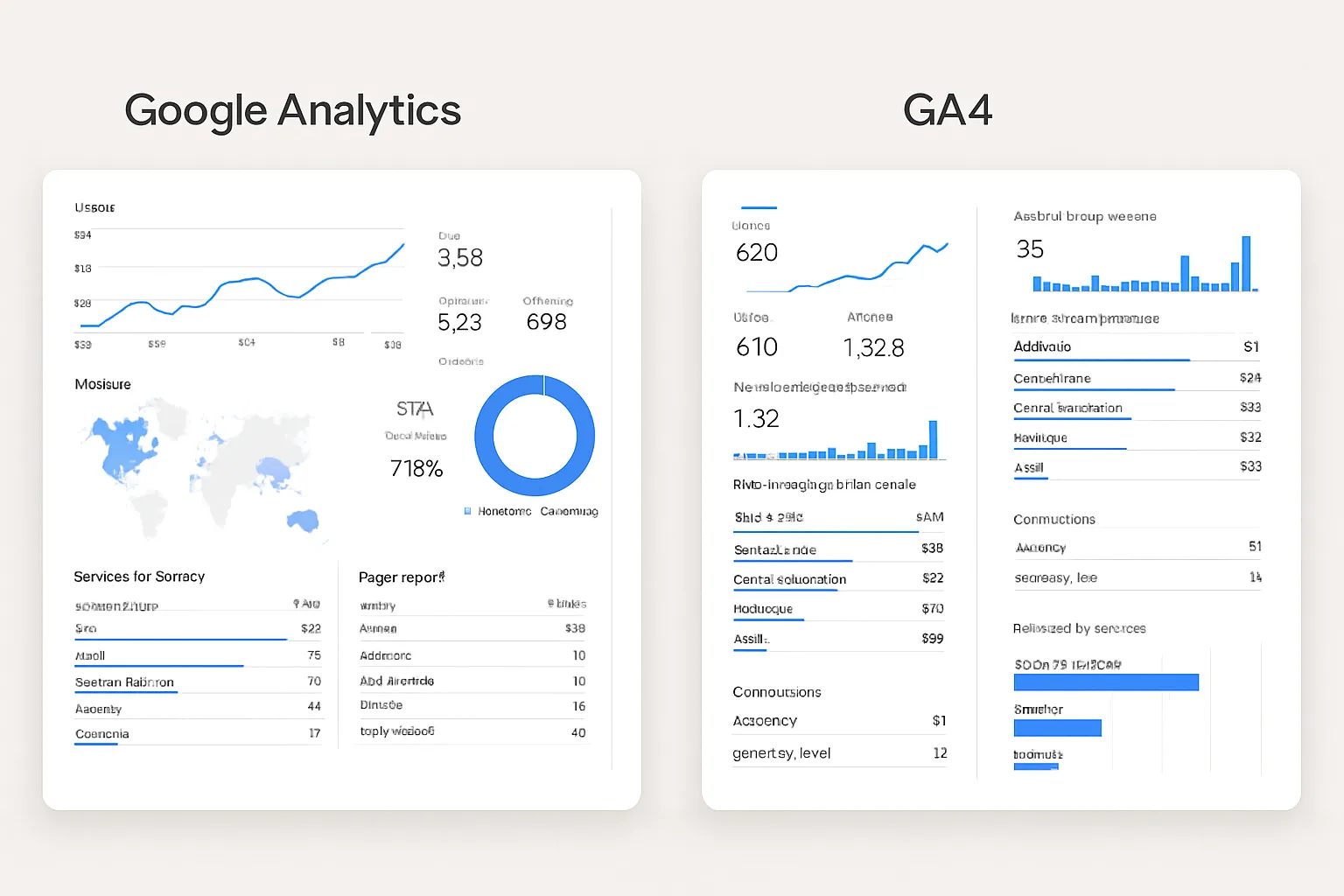
Why GA4 Replaced Bounce Rate
Google Analytics 4 replaced the bounce rate metric with engagement rate. This was a deliberate design decision: the UA bounce rate was considered misleading for modern web use, particularly for single-page applications, content sites, and landing pages where a user reading 3,000 words and leaving is counted the same as a user who landed and immediately clicked back.
What Is an Engaged Session?
In GA4, a session is "engaged" when it meets at least one of these criteria:
- Session lasted 10 seconds or more
- Session included 2 or more page views (or screen views)
- Session included a conversion event (Key Event)
If none of these are true, it is a "non-engaged session" — the equivalent of a bounce in UA terms.
Engagement Rate Calculation
Engagement Rate = Engaged Sessions / Total SessionsBounce Rate = 1 - Engagement Rate. GA4 also shows Bounce Rate in standard reports (as of 2023) — it is literally 100% minus the engagement rate. So both metrics are available, just derived from the engaged session threshold.
Why 10 Seconds Is Better Than 0 Seconds
In Universal Analytics, a bounce was any session with only one pageview — regardless of how long the user spent on that page. A user who read a long blog post for 8 minutes and then left was counted as a bounce. This was particularly misleading for content publishers and informational landing pages.
GA4's 10-second threshold means a user who reads your article for 30 seconds, finds the answer they were looking for, and leaves is counted as engaged — not bounced. This gives a more accurate picture of whether pages are serving their purpose.
What Engagement Rate to Aim For
Benchmarks vary significantly by industry and page type:
- Blog/content pages: 50-70% engagement rate is typical (people read and leave)
- Service/product pages: 60-80% (should engage users considering your offering)
- Landing pages: 40-70% (varies by traffic quality and offer relevance)
- Ecommerce product pages: 55-75%
Low engagement rate on a page (below 30%) usually indicates: poor traffic quality to that page, very slow page load speed, or a significant UX/content mismatch.
Engagement Rate by Channel
Segment engagement rate by acquisition channel in GA4 (Reports then Acquisition then Traffic Acquisition then add Engagement Rate):
- Organic search typically has the highest engagement (users who searched and found specifically your page)
- Paid traffic often has lower engagement (broader targeting, less intent)
- Email traffic should have very high engagement (already interested audience)
- Social media traffic often has low engagement (passive discovery, not active search)
Summary
Engagement rate is GA4's primary quality metric for sessions, replacing UA's bounce rate. An engaged session lasted 10+ seconds, had 2+ views, or included a conversion. The metric is more forgiving of legitimate single-page visits than bounce rate was, giving a more accurate picture of content quality. Monitor engagement rate by channel to identify which traffic sources bring genuinely interested users.
See our GA4 Setup & Audit service for engagement analysis and optimisation.
Need help interpreting your GA4 engagement data? Contact Adslytics.
Need expert tracking setup?
Our Google Tag Manager experts have delivered 500+ tracking setups with a 98% success rate.
Get a Free Consultation →