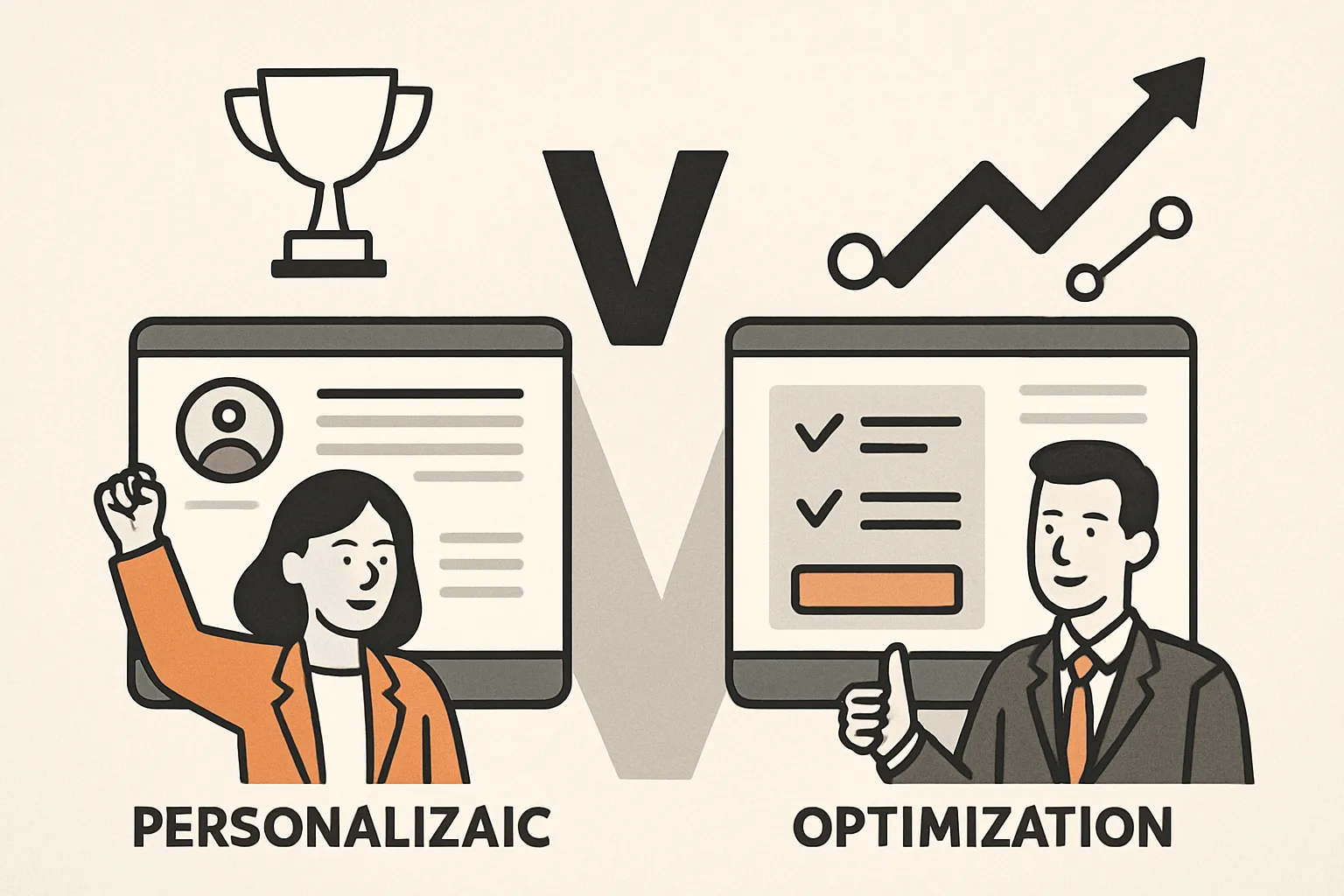
Two Paths to Conversion Improvement
There are fundamentally two approaches to improving conversion rates:
- Optimization: Find the single best version of your page for all users (A/B testing)
- Personalization: Show different page versions to different audience segments based on who they are
These approaches are complementary but not interchangeable. Our CRO team uses this framework to decide which approach to apply.
When Optimization (A/B Testing) Wins
When Needs Are Relatively Homogeneous
If your visitors are broadly similar in their goals and objections, a single optimized page version serves everyone well. Early-stage businesses with a narrow target market are often best served by optimization before personalization — personalization adds complexity without benefit if your audience wants the same thing.
When You're Fixing Fundamental UX Problems
A broken checkout form, an unclear headline, or a missing CTA is a problem for everyone. Fix universal problems first through optimization. Personalization on top of a fundamentally broken page doesn't help.
When Traffic Is Too Low to Segment
Personalization segments your traffic into smaller buckets, each needing sufficient sample size to measure effectiveness. If you already struggle to run A/B tests because of traffic volume, personalization makes measurement even harder. Optimize the unified experience first.
When Personalization Wins
When Audience Intent Is Genuinely Different
New visitors vs. returning customers, enterprise buyers vs. SMB, users who found you via brand search vs. problem-aware search — these audiences have different contexts, objections, and needs. A single page version is a compromise that fully satisfies none of them.
Example: new visitors need to understand what you do and why they should trust you. Existing customers need to know about new features and feel valued. The same homepage can't perfectly serve both.
When You Have the Data to Identify Segments Reliably
Personalization requires knowing who each visitor is. CDP-powered personalization can identify returning customers, customer tier, past purchase behavior, and industry — enabling genuine behavioral personalization. Without reliable identification, personalization often misclassifies users and serves the wrong experience.
When the A/B Test Shows Contradictory Segment Results
If an A/B test shows variant A wins for new users but variant B wins for returning users — that's the personalization signal. Don't pick a "winner" and implement it for all users. Implement both, with the right version served to each segment.
The Combined Approach
Best practice: optimize first, personalize on top.
- Run A/B tests to find the best-performing page structure and content for your primary audience
- Implement the winning version as the default
- Identify high-value audience segments where custom experiences would further improve conversion
- Build personalized variants only for those segments, on top of the optimized base
This prevents the failure mode of building 10 personalized variants before you've optimized any of them, resulting in 10 mediocre pages instead of one great one.
Measurement Complexity
Personalization is harder to measure than A/B testing because you can't easily run a holdout (showing the non-personalized experience to a segment that should receive personalized content would deliberately hurt conversion).
Use pre/post analysis with appropriate controls. Connect your personalization platform to GA4 and your CDP for cross-platform measurement. Our CRO team can help you decide which approach to prioritize. Contact us for a personalization readiness assessment.
Need expert tracking setup?
Our Google Tag Manager experts have delivered 500+ tracking setups with a 98% success rate.
Get a Free Consultation →