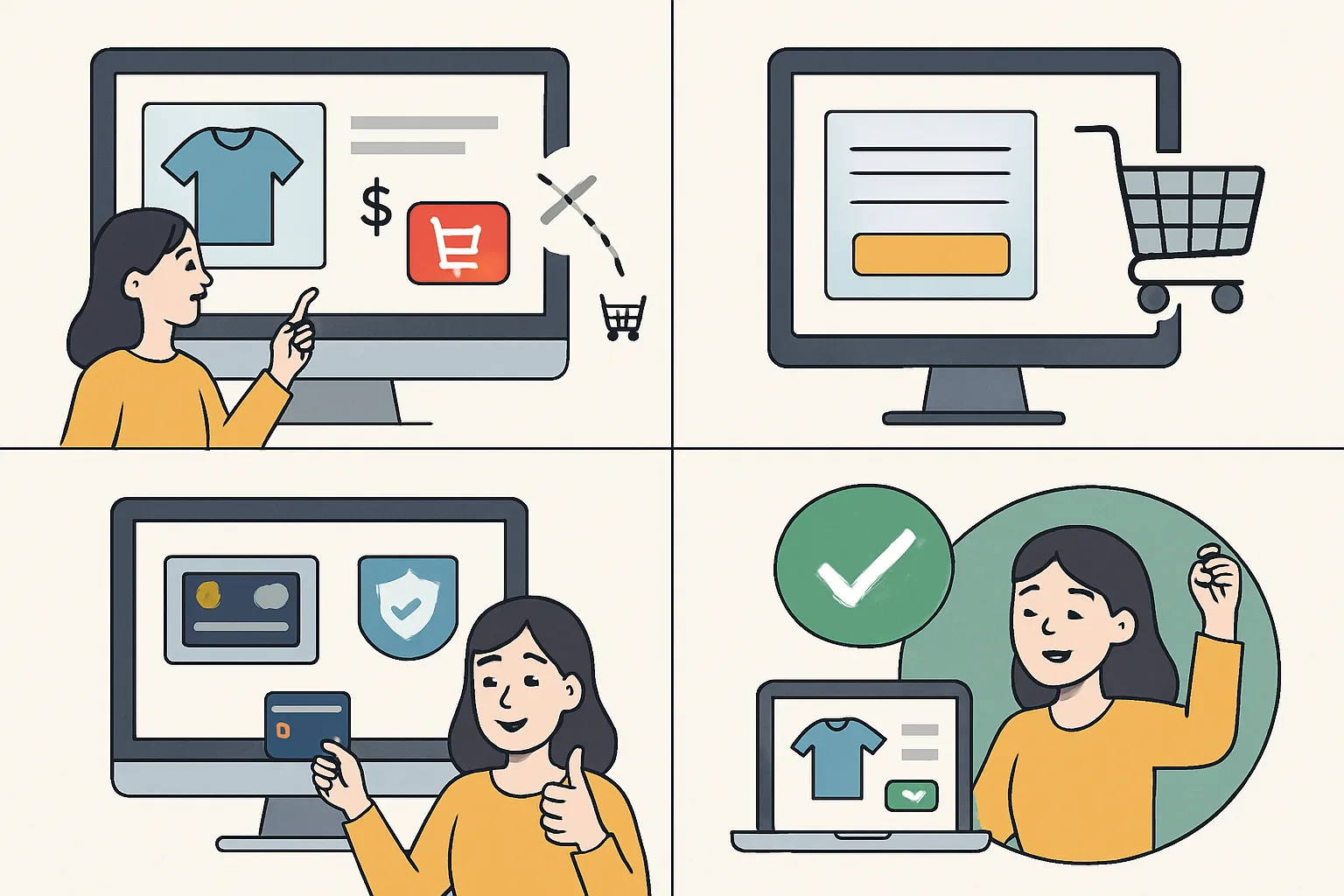
Checkout Abandonment: The Most Expensive Leak
The average checkout abandonment rate is 70–75%. For most ecommerce businesses, recovering even a fraction of this is worth more than any traffic acquisition campaign. A shopper who has added to cart has already made the psychological decision to buy — checkout friction is what stops them from completing.
Our CRO team focuses on checkout as a priority in every ecommerce engagement. Here's the systematic approach.
Step 1: Diagnose Where Users Drop Off
Before optimizing, know which checkout step is leaking. Set up a GA4 funnel exploration with these steps:
- Cart view → Information step → Shipping step → Payment step → Confirmation
The step with the highest drop-off gets your first attention. Common patterns:
- Cart → Information: Usually account creation friction or lack of guest checkout
- Information → Shipping: Unexpected shipping cost (the most common overall cause)
- Shipping → Payment: Payment method not available, trust concerns
- Payment → Confirmation: Payment processing errors, form complexity
Step 2: Enable Guest Checkout (If Not Already)
Forcing account creation before purchase kills checkout conversion. Studies consistently show that "forced registration" is the #1 reason for checkout abandonment. Enable guest checkout with an optional "save your details" offer post-purchase.
Step 3: Show Total Cost Early
The primary driver of checkout abandonment is unexpected costs — particularly shipping. Show shipping cost (or free shipping threshold) on the cart page before checkout begins. If shipping is expensive, consider:
- Free shipping over a threshold (and show progress toward it)
- Flat-rate shipping communicated upfront
- Shipping cost calculator in the cart
Step 4: Streamline the Form
Every field is a dropout opportunity. Audit your checkout form:
- Address: Use address autocomplete (Google Places API) to reduce keystrokes
- Phone: Is it truly required? Make optional if possible
- Billing address: Default to "same as shipping" with a checkbox to change
- Payment details: Enable browser autofill. Test that card number, expiry, and CVV fields accept paste.
Step 5: Add Trust Signals at Payment
The payment page is where trust concerns peak. Include:
- SSL padlock indicator (or "Secure checkout" badge)
- Accepted payment method logos (Visa, Mastercard, PayPal, Apple Pay)
- Return policy brief reminder ("30-day returns, no questions asked")
- Contact option if they have questions ("Need help? Chat with us")
Step 6: Expand Payment Options
Payment method unavailability is a hard stop. At minimum:
- Major cards (Visa, Mastercard, Amex)
- PayPal (17% of online shoppers prefer it)
- Buy Now Pay Later (Klarna, Afterpay) — increases AOV and conversion for higher-price items
- Apple Pay / Google Pay for mobile (reduces mobile checkout to 1–2 taps)
Step 7: Optimize for Mobile
Mobile checkout abandonment runs 15–25% higher than desktop. Specific mobile issues:
- Keyboard type mismatches (number pad for card fields)
- Small tap targets on form radio buttons and checkboxes
- Horizontal scrolling requirements (table-style order summaries)
- Full-page address popups that lose scroll position
Test your mobile checkout on real devices — not just browser DevTools responsive mode.
Step 8: Implement Abandoned Checkout Recovery
Some abandonment is unavoidable (comparison shopping, deciding to wait). Recover these with:
- Cart abandonment email sequence (requires capturing email before checkout completion)
- Exit-intent popup on the checkout page with a small incentive for hesitant shoppers
- Retargeting ads showing the specific products abandoned
Track ecommerce events properly to measure recovery campaign performance. Our CRO team conducts checkout audits and implements these optimizations systematically. Contact us to reduce your checkout abandonment.
Need expert tracking setup?
Our Google Tag Manager experts have delivered 500+ tracking setups with a 98% success rate.
Get a Free Consultation →