CRM and CDP Integration for Omnichannel Marketing
📌Introduction
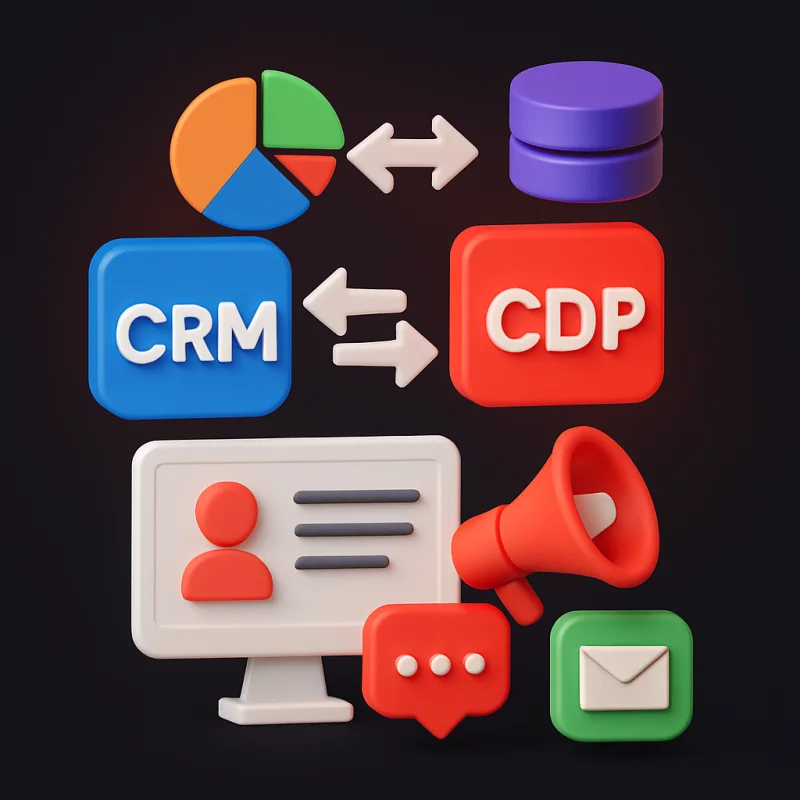
A B2B company needed to connect their Salesforce CRM (sales data) and HubSpot (marketing automation) with their event tracking data through a CDP to create a truly unified omnichannel marketing system that eliminated data silos between sales and marketing.
❗The Problem
Marketing had no visibility into where leads were in the sales pipeline. Sales had no visibility into which marketing content a prospect had engaged with. Marketing was sending promotional emails to active deal prospects in final negotiation stages, creating friction with the sales team.
🔍Identifying the Causes
HubSpot (marketing) and Salesforce (sales) were partially integrated but not bidirectionally in real-time. There was no shared data layer connecting behavioral events (website, product) with CRM deal stages. Marketing automation ran independently of sales activity, creating conflicts.
⚠️Consequences for the Business
Marketing emails to 'deals in negotiation' stage were causing at least 3 deal collapses per quarter (quantified in sales team retrospectives). Marketing was unable to prioritize lead nurturing based on deal stage, wasting nurturing resources on cold or won/lost opportunities. ROAS calculations were disconnected from actual revenue in Salesforce.
✅Solution
Implemented Segment as the CDP hub connecting Salesforce, HubSpot, product event data, and website behavior. Built bidirectional sync: Salesforce deal stages flowed to HubSpot to suppress promotional emails to active deals; HubSpot engagement scores (email opens, page visits, content downloads) flowed to Salesforce as lead scoring signals for sales prioritization.
📈Results
Sales-marketing conflicts over email timing were eliminated. Revenue-attributed Salesforce deals became directly connectable to marketing touchpoints for the first time. Lead prioritization by sales reps using HubSpot engagement score led to 28% improvement in outreach-to-meeting conversion. Overall pipeline velocity improved by 19%.
🏁Conclusion
CRM-CDP integration resolves one of the most persistent B2B organizational challenges: sales-marketing alignment. When both teams work from the same real-time data, conflict disappears and joint performance improves.
💡Key Takeaways
Bidirectional CRM-marketing automation sync is the foundation — one-way sync creates as many problems as it solves. Define a shared lead quality score that both teams agree on before building the integration. Suppressing marketing emails to active sales deals is the highest-value quick win from CRM-marketing integration.