The Simple Version
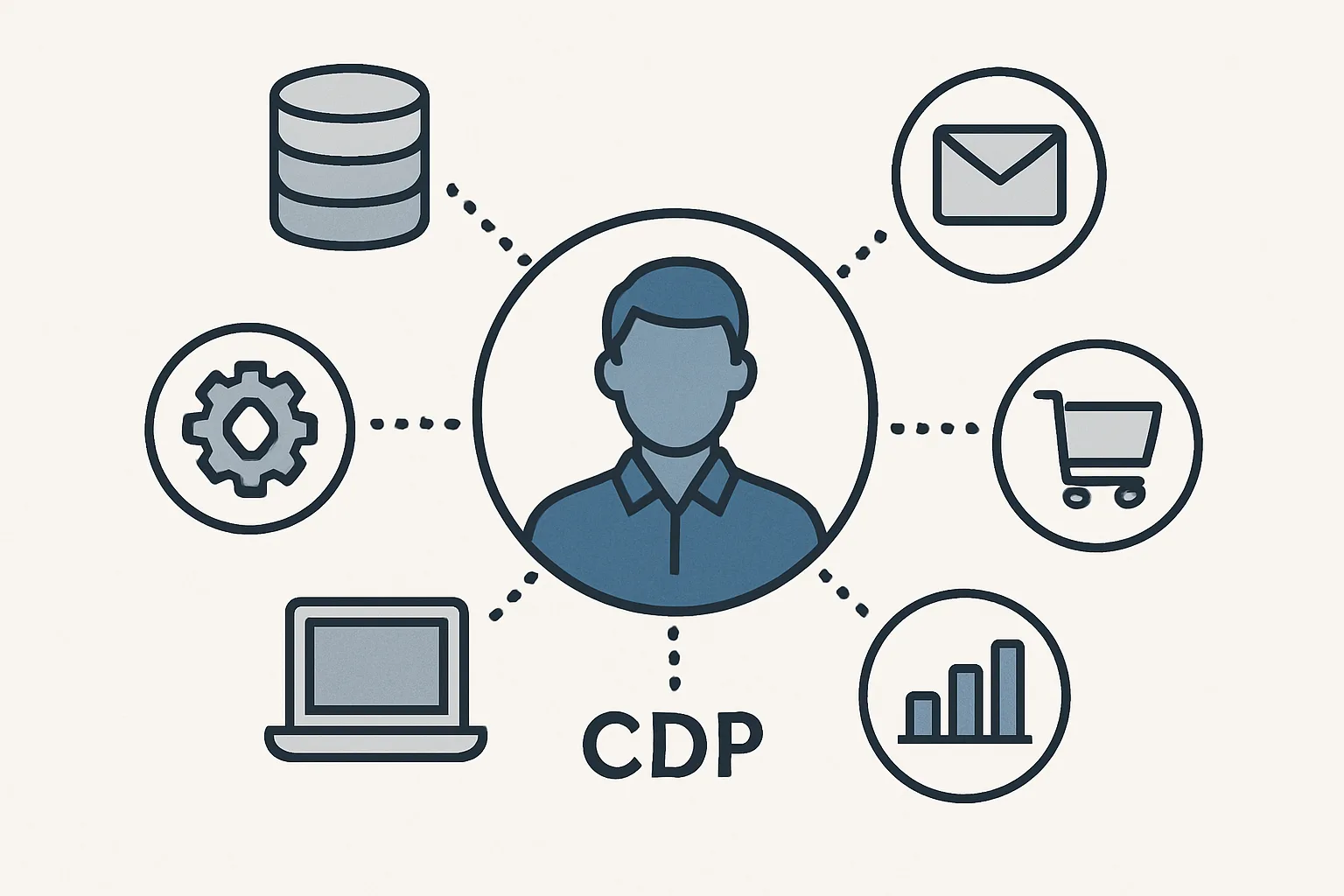
A Customer Data Platform (CDP) is software that collects data about your customers from every source — your website, app, CRM, email platform, ad platforms, physical stores — and builds a single, unified profile for each person. That unified profile is then available to every marketing, sales, and product tool in your stack.
Think of it as a universal customer record: one place where all customer data lives, always up to date, always accessible to the tools that need it. At Adslytics, our CDP implementation service helps businesses design and deploy this infrastructure correctly from day one.
Why Businesses Need a CDP
Without a CDP, customer data is fragmented across dozens of tools:
- Your email platform knows their email address and open history
- Your ad platform knows their click and view history
- Your website analytics knows their browsing behavior
- Your CRM knows their purchase history and support tickets
None of these tools talk to each other. The result: disconnected customer experiences, inconsistent personalization, and significant data waste.
A CDP solves this by becoming the connective tissue between all these systems. Data flows in from everywhere, gets unified into customer profiles, and flows out to wherever it's needed.
How a CDP Works
1. Data Collection
The CDP collects events and user data from all your sources:
- Website tracking via JavaScript snippet (similar to Google Analytics)
- Mobile app tracking via SDK
- Server-side events from your backend
- Historical data imports from existing databases
- Real-time streams from other tools via API
2. Identity Resolution
This is where the magic happens. The CDP matches anonymous and known users across devices and sessions. When someone browses your site anonymously, then fills in a contact form, then makes a purchase, the CDP stitches these events into one unified profile — merging the anonymous session history with the known customer record.
3. Profile Building
Each unified profile holds:
- Identity attributes (email, phone, user ID, device IDs)
- Behavioral data (pages visited, products viewed, features used)
- Transactional data (purchases, subscriptions, refunds)
- Computed traits (total lifetime value, average order value, days since last purchase)
- Audience memberships (which segments this customer belongs to)
4. Activation via Destinations
The CDP syncs these profiles and segments to your marketing tools in real-time or on a schedule. You build an audience once ("customers who purchased in the last 30 days but haven't opened an email in 14 days") and sync it everywhere — email platform, Google Ads, Facebook, your CRM.
What Makes a CDP Different from Other Tools
The CDP occupies a unique position in the data stack:
- vs. CRM: CRMs focus on sales relationships. CDPs focus on behavioral data and marketing activation. CDPs feed data to CRMs, not the other way around.
- vs. DMP: DMPs work with anonymous, third-party audience data for advertising. CDPs work with your own first-party, identified customer data — far more valuable and privacy-compliant.
- vs. Analytics tools: GA4 is great for site behavior analysis. It's not designed to build persistent customer profiles or sync data to other tools.
- vs. Data Warehouse: Data warehouses store and query data. CDPs collect, unify, and activate it. They often work together — CDP feeds the warehouse, warehouse data returns to CDP.
When You're Ready for a CDP
Most businesses aren't ready for a CDP until they have:
- Multiple data collection points (web + app, or web + email + CRM)
- A need for personalized cross-channel experiences
- Dedicated marketing or data team resources
- A clear use case that generates ROI (better ad targeting, email personalization, product recommendations)
The foundation before a CDP: proper event tracking via GTM and a clean data layer. Without good upstream data collection, a CDP just unifies bad data faster.
Ready to explore whether a CDP is right for your business? Talk to our team for an honest assessment of your data stack readiness.
Need expert tracking setup?
Our Google Tag Manager experts have delivered 500+ tracking setups with a 98% success rate.
Get a Free Consultation →