Why Cadence Matters
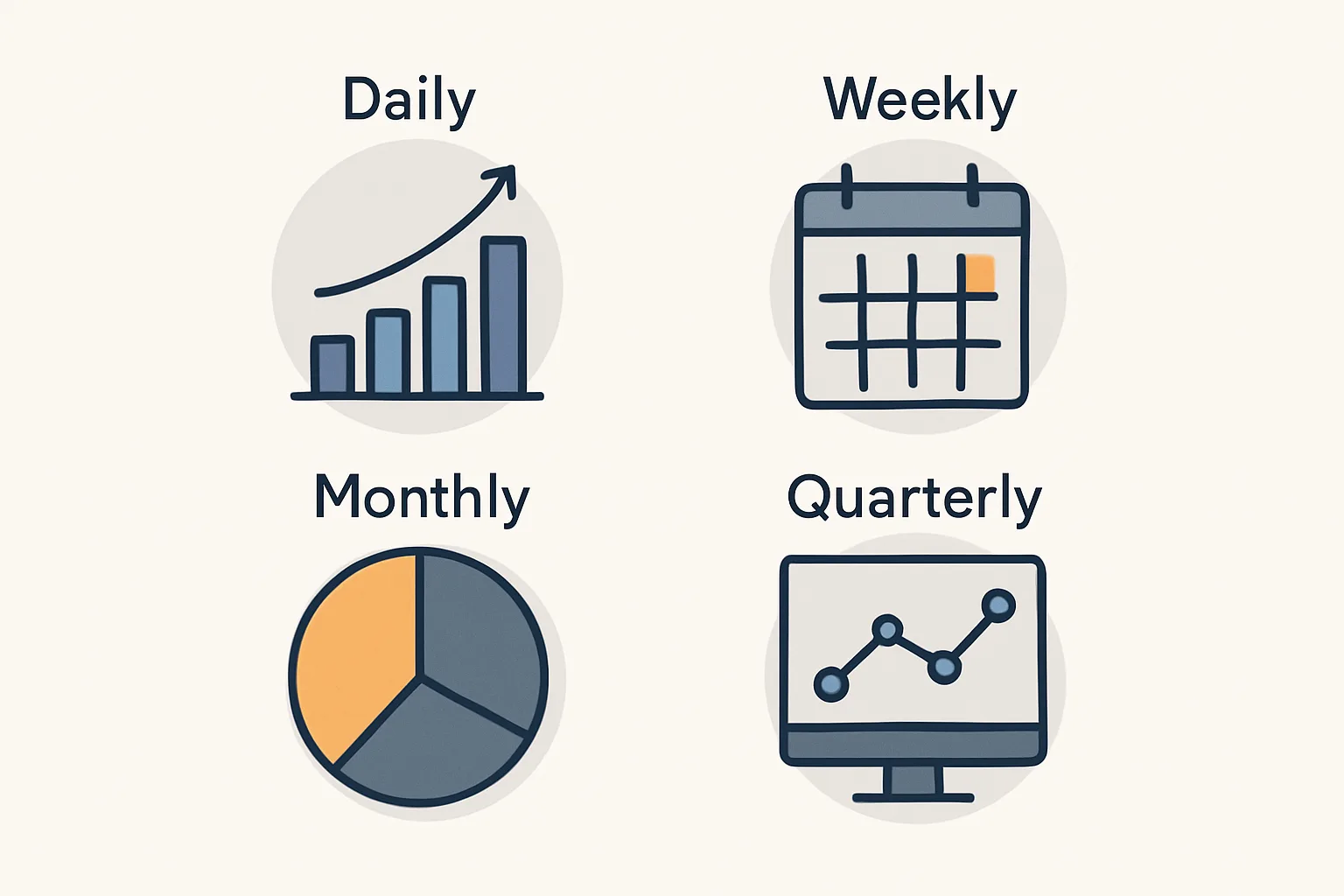
The same metric reviewed at the wrong frequency produces poor decisions. Reacting to daily conversion rate variance creates noise-driven changes. Waiting a quarter to see your CAC means you've been over-spending for 90 days before noticing. Matching review frequency to signal frequency is the foundation of good marketing analytics practice.
Our marketing analytics team designs reporting cadences as part of every engagement.
Daily Metrics: Operational Monitoring
Purpose: Catch anomalies and confirm systems are working. Not for strategic decisions.
Who reviews: Paid media managers, operations team
What to check:
- Ad spend: Is daily budget consuming as expected? Any unexpected over/under delivery?
- Conversion volume: Significant drop from yesterday's baseline? (Could indicate tracking issue or campaign problem)
- Revenue (ecommerce): Is daily revenue tracking toward the weekly target?
- Error monitoring: Are any tracking errors appearing in GTM or GA4?
Decision types: Pause broken campaigns, investigate tracking anomalies, flag for deeper investigation.
Important: Do NOT make strategic changes based on one day of data. Daily variance in conversion rate and revenue is normal and not statistically meaningful.
Weekly Metrics: Performance Management
Purpose: Channel performance optimization and tactical adjustments
Who reviews: Marketing team
What to check:
- Channel performance vs. weekly KPI targets (ROAS, CPA, leads by channel)
- Landing page performance (conversion rates by page)
- Email metrics (open rate, CTR, revenue per send)
- Active A/B test status (do not interpret results early)
- Paid ad quality signals (quality score, relevance scores)
Decision types: Budget reallocation between campaigns, creative rotation, bid adjustments, landing page fixes.
Connect GA4 and ad platform data in a Looker Studio dashboard for weekly review.
Monthly Metrics: KPI Review and Strategy
Purpose: KPI performance against targets, strategic adjustments
Who reviews: Marketing leadership + senior management
What to check:
- All marketing KPIs vs. monthly targets (MQLs, CAC, ROAS by channel, email revenue)
- Channel mix and budget allocation efficiency
- Customer acquisition trends (volume + quality)
- MER (blended marketing efficiency ratio)
- Funnel conversion rates (where are we losing people?)
- Completed A/B test results and implementation status
Decision types: Budget reallocation across channels, KPI target revision, new campaign approvals, headcount or agency budget decisions.
Quarterly Metrics: Strategic Review
Purpose: Business objective alignment, strategic pivots, planning
Who reviews: All stakeholders including finance and executives
What to check:
- Progress vs. quarterly business objectives (revenue, market share, customer count)
- LTV:CAC ratio trend (is the business model improving or degrading?)
- Attribution calibration (do incrementality signals agree with attribution?)
- Measurement plan review (are we tracking the right things? do KPIs still match current goals?)
- Competitive intelligence and market context
Decision types: Annual budget allocation, channel strategy changes, new market or product initiatives, measurement plan updates.
Making the Cadence Work
Build reporting into calendar invites with pre-built dashboards, not ad-hoc pulls. Decision-makers should receive the report and come to the meeting having reviewed it — the meeting is for decisions, not data presentation.
Our marketing analytics team builds reporting dashboards and cadence documentation. Contact us to design your reporting cadence.
Need expert tracking setup?
Our Google Tag Manager experts have delivered 500+ tracking setups with a 98% success rate.
Get a Free Consultation →