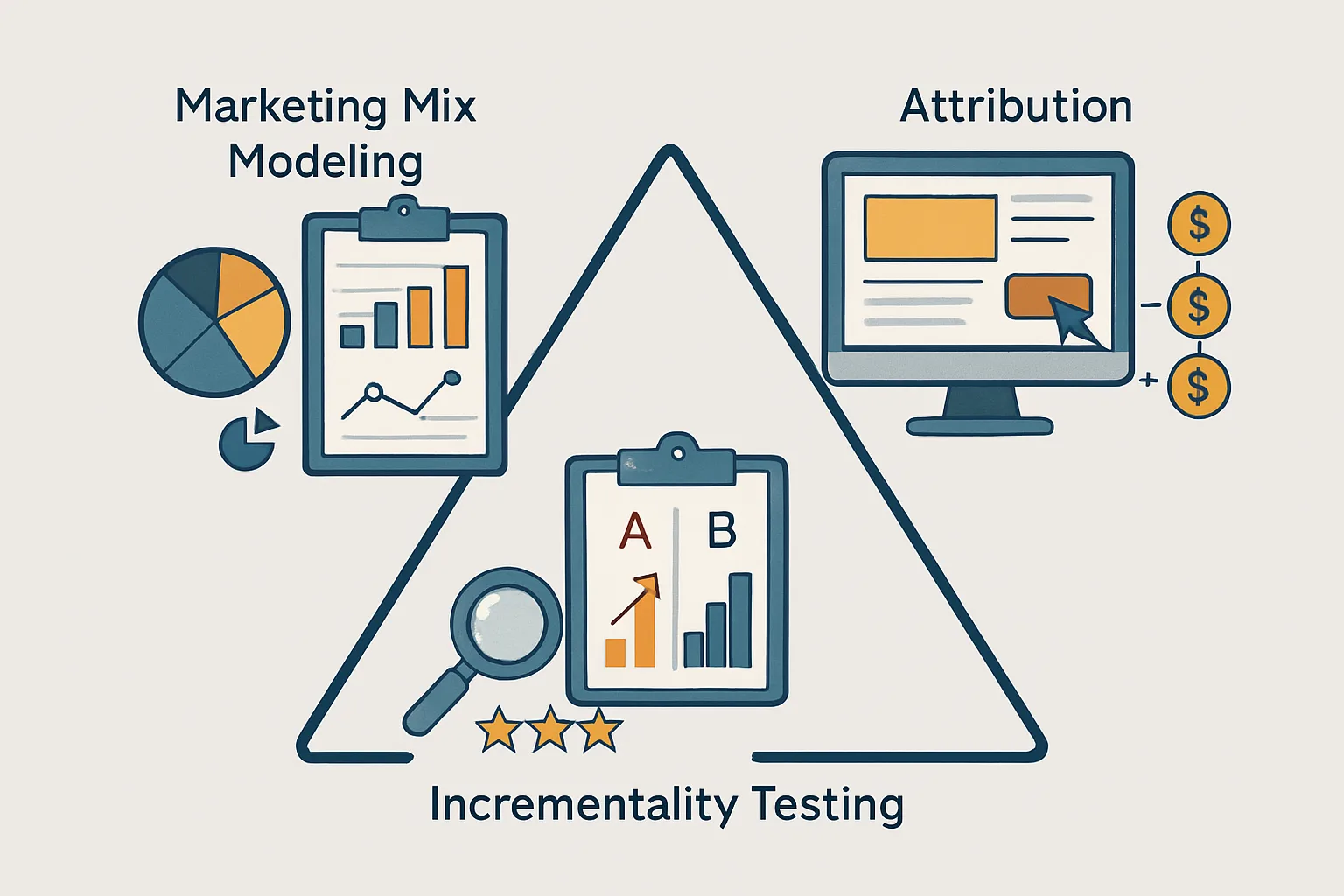
Three Measurement Approaches, Three Questions
Attribution, marketing mix modeling (MMM), and incrementality testing each answer a different question about marketing effectiveness. Understanding which question you need answered determines which tool to use — and sophisticated measurement programs use all three in combination.
Our marketing analytics team architects measurement programs using the right combination for each client's situation.
Attribution: What Touchpoints Were Involved?
What it answers: Which channels did converting customers interact with before purchase?
How it works: Tracks individual user journeys, assigns credit to touchpoints using a defined model (last click, data-driven, etc.)
Best for: Day-to-day channel optimization, budget allocation within digital channels, understanding customer journey patterns
Limitations: Correlation-based (doesn't prove causation), privacy-degraded tracking, cross-device gaps, doesn't capture offline channels or view-through
Cost: Low — built into GA4 and ad platforms
Latency: Near real-time
Incrementality Testing: Did the Channel Actually Cause Conversions?
What it answers: How many additional conversions did this channel generate that wouldn't have happened without it?
How it works: Randomized controlled experiment — split your audience into an exposed group (sees your ads) and a holdout group (doesn't). Compare conversion rates. The difference is true incremental lift.
Best for: Proving ROI of individual channels, calibrating attribution models, identifying "wasted" spend on users who would have converted anyway
Limitations: Can only test one channel at a time, requires significant volume, takes weeks per test, can't run continuously
Cost: Medium — requires time investment but minimal tooling cost. Some platforms (Meta, Google) offer built-in lift studies.
Latency: 4–8 weeks per test
Marketing Mix Modeling: What's the Optimal Budget Allocation?
What it answers: What is the aggregate, statistical contribution of each marketing channel to revenue, and how should I allocate budget across channels?
How it works: Statistical regression model using time series data of marketing spend by channel + external factors (seasonality, economic conditions, competitor activity) + revenue outcomes. Estimates the marginal return of each channel at different spend levels.
Best for: Top-level budget allocation decisions, capturing offline spend impact, privacy-safe measurement (works without user tracking), understanding diminishing returns curves
Limitations: Requires 2+ years of historical data, slow to update (quarterly at best), expensive to build and maintain properly, doesn't work at campaign level
Cost: High — traditionally £50K+ for a proper MMM build, though "Lightweight MMM" open source tools have reduced this
Latency: Quarterly
How to Use All Three Together
Leading measurement teams use all three in a hierarchy:
- MMM: Annual/quarterly strategic budget allocation across major channels
- Incrementality: Quarterly validation of specific channel ROI claims
- Attribution: Weekly/daily operational optimization within channels
Where they conflict — and they will — incrementality testing is the most reliable arbiter. If your attribution credits Google Ads with 500 conversions but an incrementality test shows only 300 are truly incremental, the incrementality number should inform budget decisions.
Our marketing analytics consulting team designs measurement programs using this triangulated approach. Contact us to discuss which measurement approach your business needs.
Need expert tracking setup?
Our Google Tag Manager experts have delivered 500+ tracking setups with a 98% success rate.
Get a Free Consultation →