The Facebook Pixel's Growing Limitations
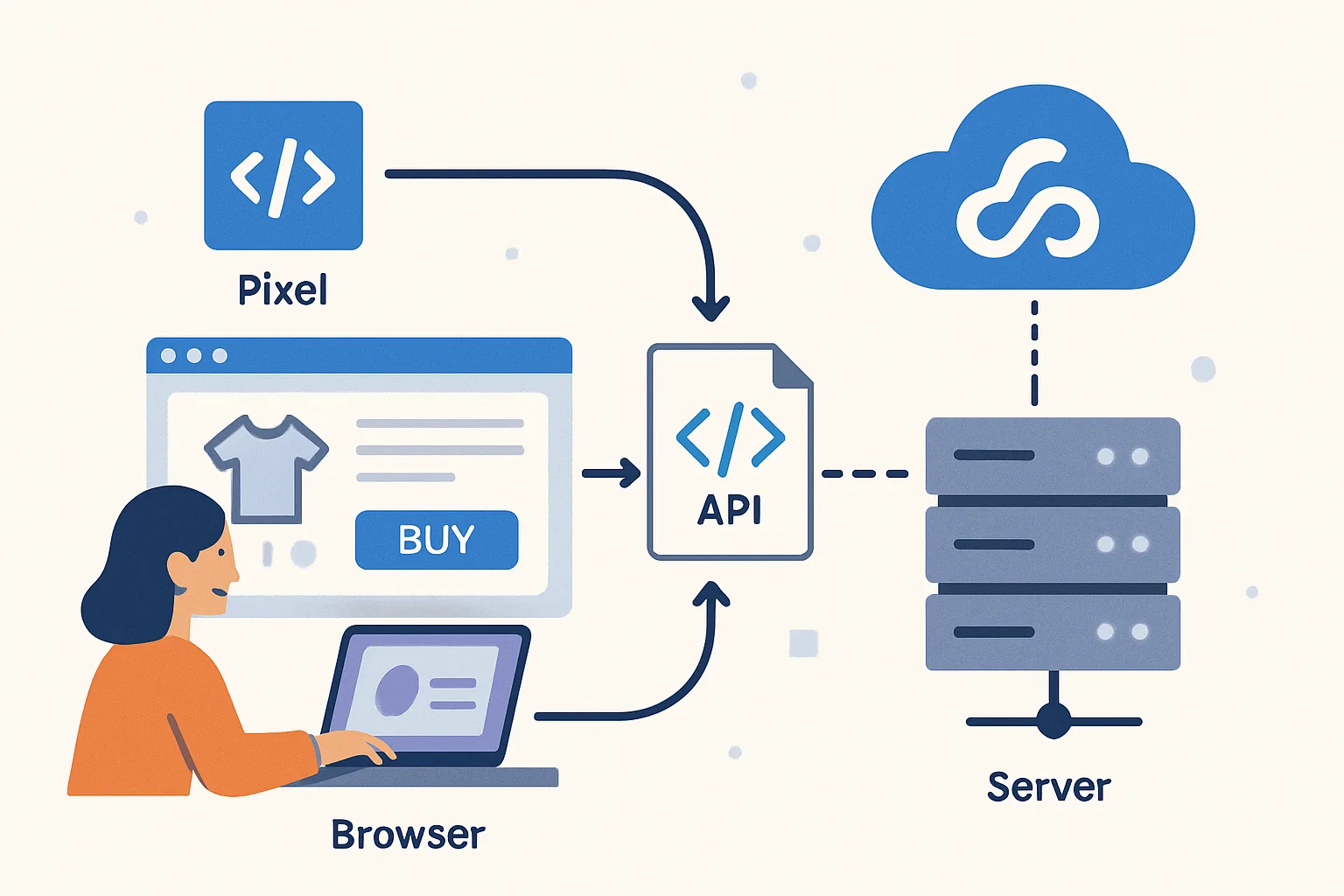
The Facebook Pixel is a JavaScript snippet that runs in the user's browser to track actions on your website — page views, add to carts, purchases — and sends this data to Meta's servers. For years, it was sufficient. That changed with:
- Ad blockers: 25-40% of desktop users and 10-15% of mobile users block tracking pixels. These users complete real purchases but the Pixel never fires.
- iOS 14+: Apple's App Tracking Transparency (ATT) framework and Intelligent Tracking Prevention (ITP) limit browser cookie persistence, breaking the Pixel's user identification for Safari users (who cannot be tracked across sessions after 7 days).
- Browser privacy features: Firefox Enhanced Tracking Protection, Brave's shields, Chrome's phase-out of third-party cookies — all reduce Pixel effectiveness over time.
The result: for many businesses, the Facebook Pixel is now capturing only 60-80% of actual conversions. Meta's ad delivery algorithm is optimising on incomplete data, which means your ads reach less of the audience that actually converts.
What the Conversions API Does
The Facebook Conversions API (CAPI) is a server-to-server integration — your server sends conversion events directly to Meta's servers via an HTTP API, bypassing the user's browser entirely. Ad blockers cannot block it (they only block browser-side code). iOS 14 restrictions do not affect it (no client-side cookie is involved). Browser privacy features are irrelevant.
The data flows like this:
- A user takes an action on your website (purchases, fills a form)
- Your server receives this information as part of the normal order/lead processing
- Your server sends the event to Meta's Conversions API endpoint with customer information (hashed email, hashed phone) and event details (value, currency)
- Meta matches this server-side event to a Meta user using the hashed customer data
- Meta attributes the conversion to the ad that drove the user
Browser Pixel + CAPI: Better Together
CAPI does not replace the Pixel — it complements it. The recommended setup is both: the browser Pixel fires when the Pixel can fire (for users not blocking it), and CAPI sends the same event from the server simultaneously. For users who block the Pixel, only CAPI fires — but Meta still gets the conversion. For users who allow both, Meta receives two events for the same action and uses the event_id parameter to deduplicate them.
What CAPI Improves
- Reported conversions: typically 15-40% increase in attributed conversions (previously missed)
- Ad delivery optimisation: Meta's algorithm optimises on more accurate conversion data → ads are shown to more people who actually convert
- CPA: better signals usually reduce cost per acquisition over 2-4 weeks of running
- Audience building: more complete conversion data builds more accurate lookalike audiences
Summary
The Facebook Pixel misses a growing percentage of conversions due to ad blockers, iOS privacy restrictions, and browser privacy features. The Conversions API sends conversion events server-to-server, bypassing these limitations. Running both together with event deduplication gives Meta the most complete conversion signal possible and improves ad delivery accuracy.
See our Facebook CAPI Setup service for implementation.
Need Conversions API implemented? Contact Adslytics.
Need expert tracking setup?
Our Google Tag Manager experts have delivered 500+ tracking setups with a 98% success rate.
Get a Free Consultation →